Have you ever experienced the sudden, electronic intervention that abruptly halts your acceleration just as the open road beckons, leaving you wondering if your engine has failed? This precise control is actually the function of vehicle speed limiters, sophisticated electronic systems that communicate with your car’s computer to cap velocity for reasons ranging from tire preservation to strict legal compliance. We will dissect the technical dialogue between sensors and fuel injection that makes this possible, while uncovering the hidden safety strategies that manufacturers employ to protect both the machine and the driver from the physics of excessive speed.
How Your Car’s Speed Is Electronically Capped
The Digital Watchdog: ECU and Sensor Communication
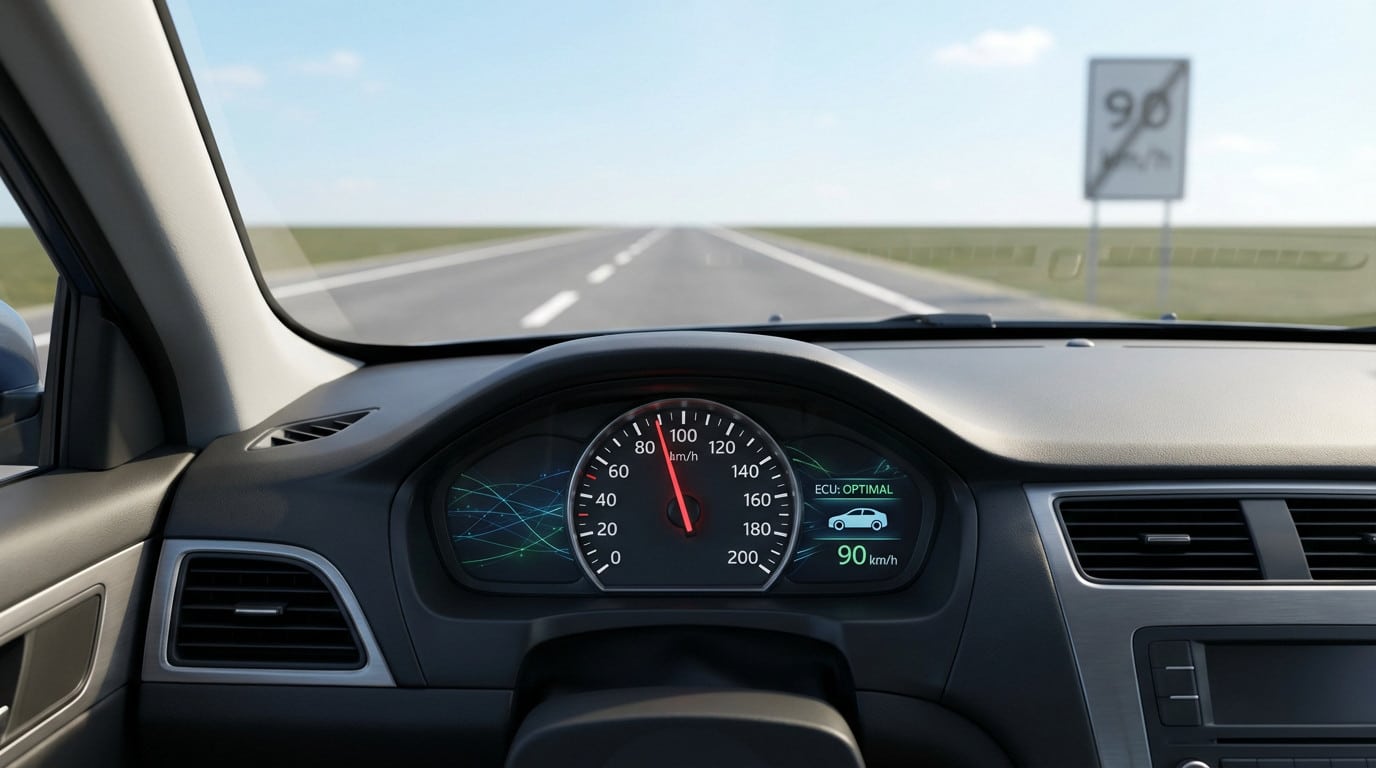
Modern cars rely on electronic sensors to track movement for vehicle speed limiters. These are often the same components used for ABS systems. They measure wheel speed continuously. This data gets sent instantly to the Engine Control Unit (ECU).
Think of the ECU as the operation’s brain. It constantly compares your current pace against the factory-set maximum limit. It is a never-ending digital dialogue happening behind the dashboard.
This communication forms the foundation for systems beyond just the evolution of the modern speedometer. It controls everything.
From Data to Deceleration: How the Limit Is Enforced
When you hit the cap, the ECU does not slam on the brakes. Instead, it intervenes directly in engine management. It simply prevents any further acceleration.
The computer takes drastic measures to restrict power output:
- It reduces fuel supply sent to the injectors.
- It limits air intake by controlling the electronic throttle.
- It cuts spark delivery to stop combustion.
Drivers can usually bypass this for emergencies by flooring the pedal, a common mechanism for speed limiters. It overrides the system.
The Why Behind the Wire: Manufacturer and Safety Motives
Now that we know the mechanics, why do manufacturers purposely handicap their machines? The reasons are messier—and more logical—than you might expect.
Protecting the Machine From Itself
The critical driver is tire protection. Every tire has a maximum speed rating; exceeding it risks catastrophic blowouts. These vehicle speed limiters ensure the car stays strictly within the rubber’s safety margin.
Consider the 2010 Bugatti Veyron Super Sport. It hit a record 431.3 km/h (268 mph) on the track, yet consumer models were limited to 413.6 km/h (257 mph) to prevent tire disintegration.
Performance Tiers and Market Strategy
Limiters also serve as a sharp marketing tool, creating clear differentiation between models. Simply put, if you want more top speed, you pay for the bigger engine.
Take the 2011 Ford Mustang: the V-6 was capped at 181.9 km/h (113 mph), while the pricier V-8 could climb to 241.4 km/h (150 mph).
Beyond upsells, physical and legal realities dictate these limits. Here is how the industry typically sets these electronic leashes:
| Vehicle Category | Typical Speed Limit (mph) | Typical Speed Limit (km/h) | Primary Limiting Factor |
|---|---|---|---|
| Economy Cars | ~110 mph | ~177 km/h | Tire rating & engine stability |
| Performance Sedans | ~155 mph | ~250 km/h | “Gentlemen’s agreement” (European models) & component protection |
| Supercars | 186+ mph | 300+ km/h | Tire integrity & aerodynamics |
| Heavy-Duty Trucks | 65-75 mph | 105-120 km/h | Legal regulations & fuel economy |
From Suggestion to Mandate: The Legal Framework
When the Law Sets the Limit
For specific vehicle classes, vehicle speed limiters act as a strict legal requirement rather than an option. Mopeds in many countries have faced these hard caps for years. This restriction maintains their specific administrative classification.
Consider commercial vehicles and heavy trucks. In 2011, the NHTSA in the United States studied mandating these devices for large rigs. Their goal was simple: improve road safety and drastically lower the severity of collisions.
These measures aim to shrink the dangerous speed gap between trucks and cars. Controlling this differential helps reduce the risk of fatal car accidents significantly.
The Dawn of Intelligent Speed Assistance (ISA)
We now enter the era of Intelligent Speed Assistance (ISA). These systems are not static; they function as dynamic tools. They adapt the vehicle’s maximum speed directly to the limit enforced on the road.
ISA systems rely on a clever mix of cameras for sign recognition and GPS data for local limits. This technology reads the road context in real-time. It detects speed signs instantly. Since 2024, this tech is standard for new models in Europe.
Drivers can still override the system by pressing the accelerator firmly. This feature is now mandatory in all new cars sold in the European Union.
The Real-World Balance: Safety vs. Frustration
On paper, vehicle speed limiters seem like the perfect solution—a digital guardian angel. But in practice, their impact on daily driving is a subject of heated debate.
The Undeniable Benefits: Safer Roads and Fuller Wallets
The primary argument is road safety. The link between high velocity and crash severity is undeniable. Capping top speed mechanically slashes this risk.
The second benefit is economic. Smoother driving, without aggressive spikes to hit prohibited speeds, leads to a reduction in fuel consumption and CO2 emissions. This is especially true for heavy fleets.
Science supports this, showing a well-documented correlation between excessive speed and accidents.
The Dark Side: System Flaws and Driver Pushback
The main complaint against ISA systems is their lack of reliability. Misread signs, outdated GPS maps, or poor visibility can trigger phantom braking or incorrect limits.
Driver criticism focuses on several specific points:
- The stress and frustration of feeling a loss of control.
- Dangerous situations created by unexpected slowing.
- Distraction caused by constant audio or vibration alerts.
Driver acceptance remains the biggest hurdle, similar to how advanced driver-assistance systems perform in bad weather.
Speed limiters represent a sophisticated dialogue between engineering constraints and road safety. Whether driven by tire integrity or legal mandates, these electronic guardians redefine our relationship with velocity. Ultimately, finding the equilibrium between driver freedom and collective security remains the pivotal challenge as we navigate toward an automated future.