Does the constant fluctuation of gas prices make optimizing vehicle energy efficiency feel like an urgent necessity for your budget? We analyze how shifting economic factors and the transition to electric power are redefining the true cost of every mile we drive. Expect to discover practical strategies and data-driven insights that separate expensive myths from real savings on the road.
The Wallet-First Guide to Vehicle Efficiency
Let’s be real: nobody cares about efficiency until it hits their bank account. It is not about saving the planet anymore; it is about saving your paycheck from spiraling costs.
Why Your Gas Bill Is So Unpredictable
You feel the sting at the pump. Remember May 2022, when prices spiked $1.50 per gallon? That wasn’t just your imagination playing tricks.
Refineries switch between summer and winter blends annually. This seasonal chemistry shift directly inflates what you pay during warmer months.
Ever notice that weird 9/10 of a cent? It is a lingering relic from old federal and state tax laws. You pay this invisible tax every single time.
- The cost of crude oil
- Refining and distribution costs
- Government taxes
- Seasonal fuel blends
Crunching the Numbers: Is Electric Really Cheaper?
We complain about high prices, yet history disagrees. Adjusted for inflation, gas has actually been higher in the past.
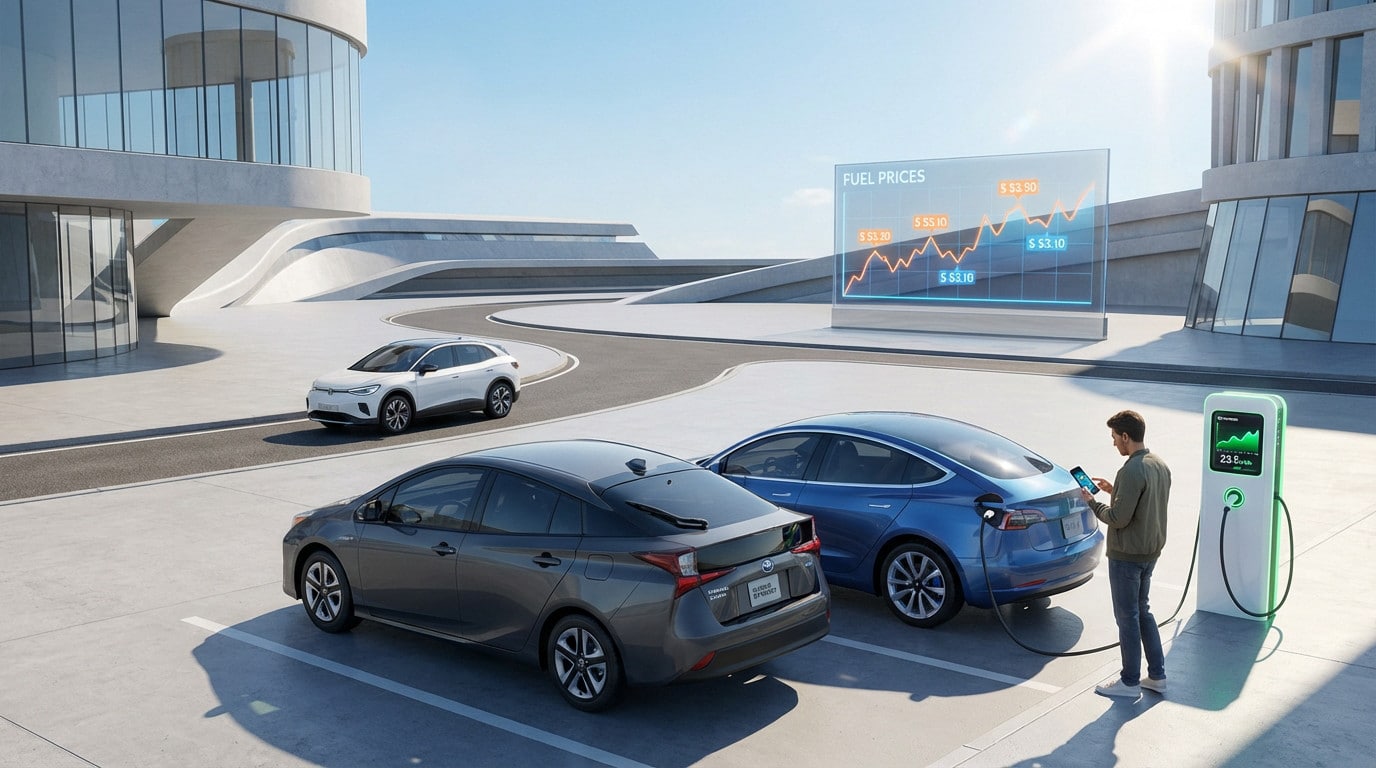
Electric vehicles are shifting from luxury toys to accessible daily drivers. They offer a tangible escape hatch from the volatility of combustion engines.
The data below ends the debate. You save on fuel, but the lower maintenance costs are the real financial win.
| Feature | Gasoline Vehicle | Electric Vehicle (EV) |
|---|---|---|
| Fuel/Energy Cost per km | ~$0.11 (based on 7L/100km at $1.60/L) | ~$0.03 (based on 0.14/kWh) |
| Drivetrain Efficiency | ~25-35% | >90% |
| Maintenance Costs (over 4 years) | 100% (Baseline) | ~25% (Reduced by 75%) |
The electric wave is here to stay
More than just a trend: the ev takeover
Let’s look at the raw engineering. Electric motors achieve an efficiency rating above 90 percent, crushing the wasteful performance of internal combustion engines. They consume absolutely nothing while idling and possess ten times fewer moving parts, meaning your mechanic gets lonely.
The market isn’t just Tesla anymore. Challengers like Rivian are finally bringing serious heat to the sector. Even legacy giants are waking up, with Honda’s new EV styling paying a sharp tribute to the classic 1970s Civic.
Range anxiety is quickly becoming a myth, with modern battery packs easily clearing 300 kilometers on a single charge. We are even seeing innovations like solar car integration to unlock new range for EVs pushing boundaries further.
Charging up and cleaning the air
Critics love to point out the initial carbon footprint of battery manufacturing. Yet, that “carbon debt” is fully paid off after driving just 30,000 kilometers, especially when charging on a green grid. From that point on, you are driving clean.
Take electric school buses as a prime example. They slash greenhouse gas emissions drastically while cutting operating costs. More importantly, they stop pumping toxic diesel fumes directly into the lungs of waiting schoolchildren.
Charging infrastructure has matured massively since the early days of 2019. In reality, 80 percent of charging happens at home or work, supported by data from a comprehensive life-cycle assessment.
You’re in the Driver’s Seat of Efficiency
While the industry is shifting towards electric, what you do today with the car you already own matters just as much.
Driving Habits: The Good, The Bad, and The Dangerous
Ever heard of hypermiling? It is the art of squeezing every last drop of range from your tank, but frankly, some folks take it way too far and risk their lives.
You really need to steer clear of the extreme tactics that safety experts flag as downright judged dangerous.
- Tailgating trucks to catch their slipstream, known as drafting.
- Killing the engine while coasting downhill, which cuts power steering and brakes.
- Pumping tires way past the safety limits.
Stick to the basics like smoothing out your acceleration and watching traffic flow, which actually works without the death wish. It’s about efficiency, distinct from exploring facets beyond pure speed on a track.
Myths and Mods: What Actually Works?
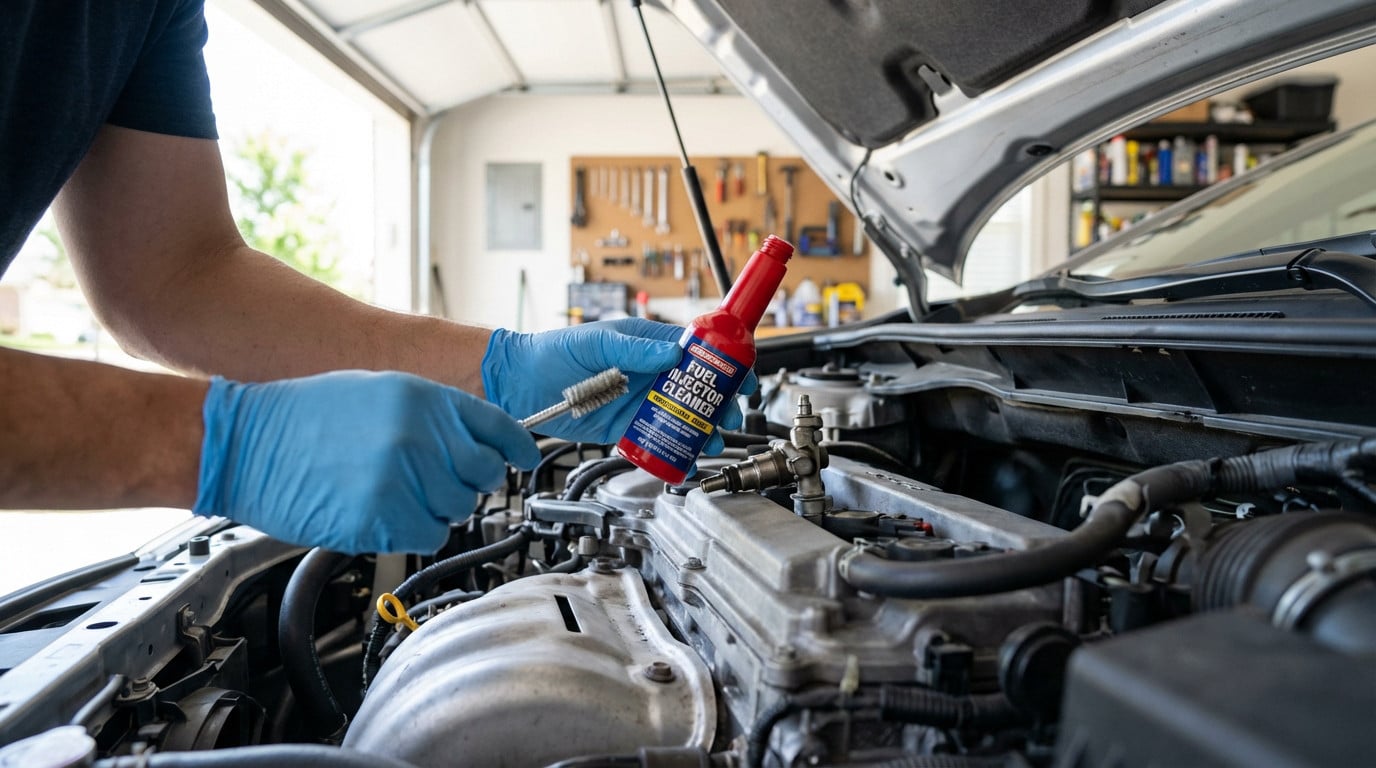
Let’s bust some legends. Filling up at dawn is scientifically valid but savings are negligible in the real world. Fuel additives are a toss-up depending on your specific engine. However, driving on a near-empty tank is real trouble; it burns out your fuel pump.
Then there is the old manual vs. automatic debate. Manuals used to be the kings of mileage, but modern automatics have gotten so smart they have largely closed that gap.
Finally, look at aftermarket modifications with a skeptical eye. Low rolling resistance tires genuinely cut drag, whereas many other “eco-gadgets” sold online are often just expensive expensive snake oil.
Navigating the road to efficiency is no longer just an option; it is a financial imperative. Whether we embrace the electric revolution or simply refine our daily driving habits, the power to curb costs lies firmly in our hands. Ultimately, the journey toward a greener, more economical future begins with the choices we make behind the wheel today.