Have you ever felt a sudden twinge of guilt while crossing an empty street, unaware that the jaywalking history legality actually plays a major role in shaping that specific fear? It is always fun to discover that what we consider a necessary safety measure was originally a ruthless marketing campaign by the auto industry to shift blame, effectively stealing the streets from the public to prioritize speed. We will examine the forgotten era when pedestrians ruled the road and reveal why this controversial, often discriminatory offense is finally facing a serious push for change in our modern cities.
From public square to traffic lane: the forgotten era of pedestrians
Before the automobile, streets were for people
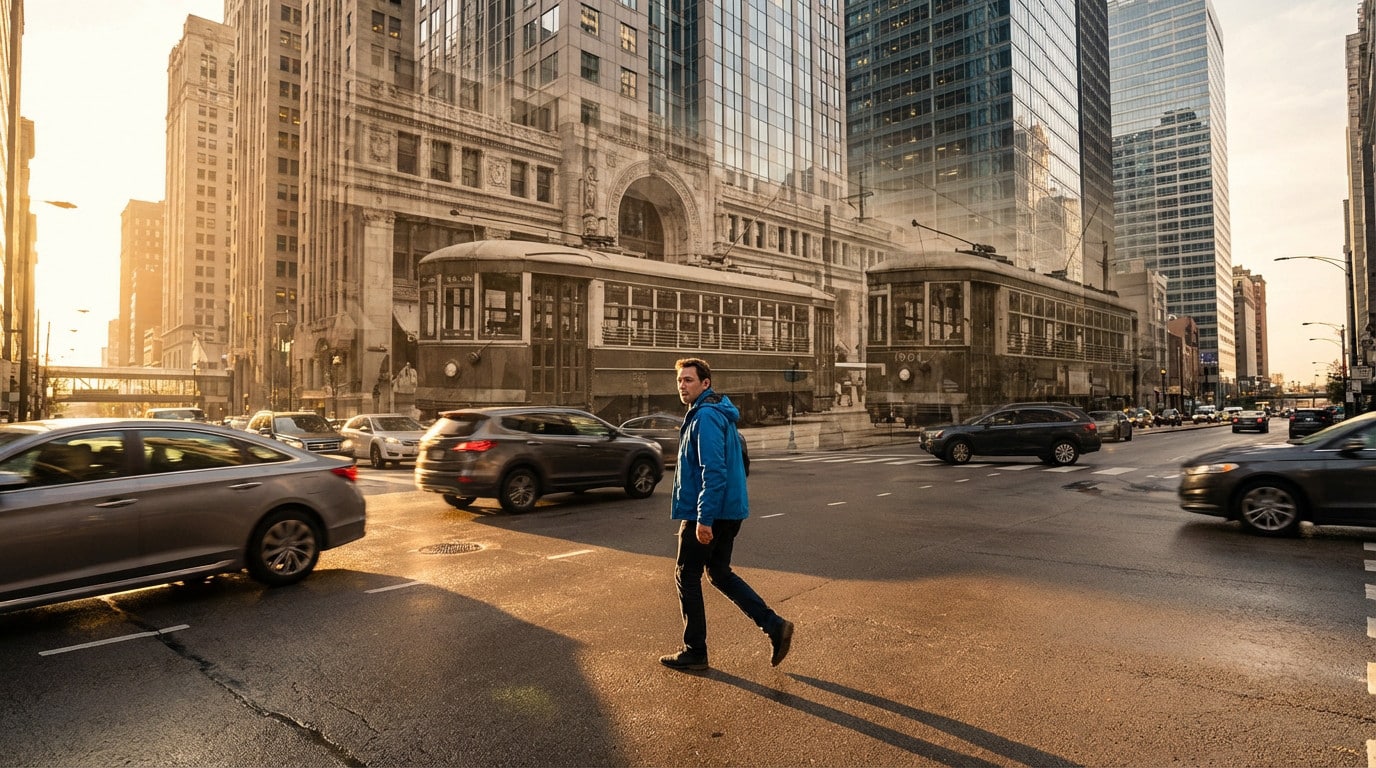
Before the combustion engine roared, streets weren’t just for transit; they were vibrant public commons. Vendors hawked goods, children played games, and pedestrians mingled freely alongside horse-drawn carriages. The pavement belonged to everyone.
When the first automobiles arrived, society viewed them as loud, menacing dangerous intruders. If a collision occurred, the blame landed squarely on the driver operating the heavy machine, never the person walking. The law protected the vulnerable.
We have lost touch with this living history where the walker ruled the road. It seems almost alien now.
The birth of a derogatory term
The etymology is nasty. A “jay” wasn’t a bird; it was slang for a rube/hick—a clueless country bumpkin dazzled by big-city lights. Using this label was a calculated insult to shame anyone obstructing the path of a vehicle.
Ironically, the press first coined “jay-driving” in June 1905 to mock incompetent carriage operators. When “jaywalking” appeared in October 1905, it actually criticized boorish behavior on sidewalks, not the act of crossing the street itself.
The rising death toll and public outrage
As car ownership surged, so did the carnage. Between 1901 and 1923, pedestrian fatalities skyrocketed, sparking intense fury among citizens who watched their neighbors die. The jaywalking history legality debate was born in blood.
The backlash was fierce. In 1923, 42,000 Cincinnati residents signed a petition demanding speed governors to slow cars down. People fought to restrict machines, not their own freedom of movement.
How the Auto Industry Invented a Crime
A Deliberate Campaign to Shift the Blame
You might assume these laws exist for safety. However, digging into jaywalking history legality reveals the concept was created from scratch by the auto lobby in the 1920s to seize public streets.
It was a textbook case of regulatory capture. The industry forced pedestrians to adapt to dangerous automotive infrastructure, not the other way around. It was a complete reversal of logic.
To sell this shift, they didn’t just lobby; they launched a psychological war. They used shame to rebrand walking as backward. Here is the propaganda playbook they used:
- Sending pre-written articles to newspapers blaming pedestrians for their own deaths.
- Launching “education” campaigns of ridicule in schools, deploying Boy Scouts to scold walkers.
- Staging humiliating public stunts, hiring clowns to get “hit” by cars to mock “jaywalkers.”
Making it Law: From Shaming to Criminalization
Shaming wasn’t enough; they needed teeth. Kansas City led the charge in 1912 with legislation restricting pedestrians to specific crossing zones, marking the beginning of the end for open streets.
Then came the heavy hitter: Herbert Hoover. As Commerce Secretary, he championed the Model Municipal Traffic Ordinance in 1928. This document served as the national blueprint to criminalize crossing outside designated spots.
By the 1930s, the transformation was total. “Jaywalking” shifted from a social faux pas to a legally recognized offense in most cities.
The Result: A World Built for Cars
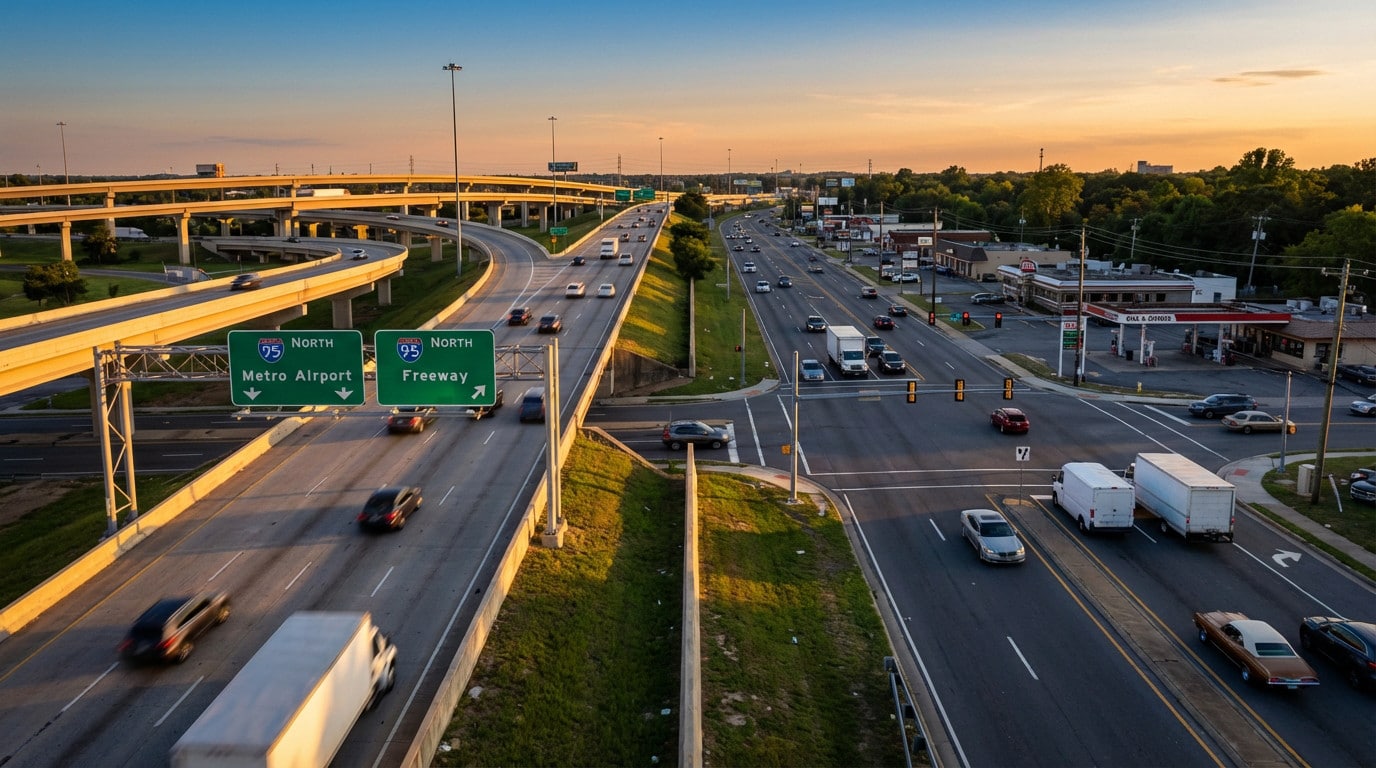
Rewriting the law was merely step one. The second phase was the physical mutation of our cities: urban highways slashed through neighborhoods and parking lots devoured prime real estate.
The car became undisputed queen, a complex machine where owners must now even delete personal data before selling it to protect privacy.
Jaywalking Legality: A Confusing Global Patchwork
A century later, the legacy of this campaign is a confusing and contradictory set of laws around the world. What is a crime here is a normal practice elsewhere.
The American Maze: A State-by-State Mess
You might assume jaywalking history legality is clear-cut, but it is actually a trap. Most US jurisdictions ban it, yet the specific rules vary wildly. There is absolutely no single federal law governing this.
Take Michigan, where the state washes its hands of it, letting cities decide. In 19 states, drivers must yield to you anywhere. But cross a state line, and suddenly you are the one legally at fault.
Even the meaning of a pedestrian signal changes depending on where you stand. It is a total legal headache.
How the Rest of the World Sees It
The American obsession with criminalizing walking is not the global standard. Many countries do not even have a concept equivalent to “jaywalking.” You are about to see how differently the world handles this.
| Country | Legality & Rules | Cultural Attitude |
|---|---|---|
| United States | Generally illegal, fines vary. Pedestrians must yield outside crosswalks. | Crossing outside a crosswalk is seen as an infraction. |
| United Kingdom | Not an offense. Pedestrians cross where safe. | Normal practice. The pedestrian death rate is 5 times lower than in the US. |
| Germany | Technically illegal if traffic is impeded (€5-€10 fine). | Generally law-abiding, but crossing on empty streets is common. |
| France | Illegal (minor €4 fine), but rarely enforced. | Very common practice. Drivers are expected to be vigilant everywhere. |
| Singapore | Strictly illegal. Fines and public shaming campaigns are used. | Heavily discouraged and socially frowned upon due to strict enforcement. |
The Modern Battleground: Safety, Justice, and the Push for Change
Beyond these legal differences, the debate over jaywalking history legality is now reignited by far deeper questions: does the law actually protect pedestrians, or does it serve another purpose?
A Tool for Discrimination?
We can’t ignore the social justice angle here. These statutes are enforced disproportionately against Black and Hispanic communities, hitting low-income individuals hardest. It creates a visibly skewed system.
Look at the investigation by ProPublica in Jacksonville regarding enforcement. It revealed that pedestrian tickets overwhelmingly targeted Black residents in that specific area. This is not just a coincidence. It represents a clear, disturbing pattern.
Critics argue these laws often serve as a pretext for police harassment and racial profiling. The Black Lives Matter movement has rightly highlighted this systemic issue.
Does It Actually Make Anyone Safer?
We must seriously question the safety argument. In 2019, the NHTSA recorded 6,205 pedestrians killed on US roads. That accounts for 14% of all traffic-related fatalities.
While 70% of deaths occur outside intersections, a significant number happen inside crosswalks too. Criminalization is clearly not a magic solution. We need better answers.
Many experts see these laws as a form of “victim-blaming“. It distracts us from the real danger of cars. It also ignores poor road design.
The Decriminalization Movement
Fortunately, the tide is turning. States like California and Nevada have started to decriminalize jaywalking. They are rethinking the old rules.
This shift brings fresh perspectives to our streets. We are seeing a push for logic over punishment. Here are the main arguments driving this necessary change:
- Restoring equity and ending discriminatory enforcement.
- Recognizing that infrastructure design is often the real problem.
- Giving pedestrians the right to assess safety for themselves.
Ultimately, the history of jaywalking reveals a constructed narrative that prioritized machines over people. As we reconsider these outdated laws, driven by demands for equity and genuine safety, the path forward emerges. We must reimagine our streets not merely as traffic lanes, but as shared public spaces where human life finally takes precedence over automotive convenience.