As autumn arrives, do we truly understand how the changing season drastically escalates the deer car collision risk, turning routine twilight drives into potential financial and physical disasters? We examine the precise combination of environmental triggers, such as the mating season and full moon visibility, that leads to millions of costly accidents and tragic injuries annually. By mastering specific defensive driving protocols and anticipating these predictable behavioral patterns, we can effectively protect our families and avoid the severe consequences associated with these sudden, often preventable, wildlife encounters.
The Staggering Reality of Wildlife-Vehicle Collisions
More Than Just a Fender Bender
Let’s look at the raw numbers in the US. We see over one million accidents involving deer annually. In a single year, State Farm recorded a massive 1.9 million claims linked to wildlife.
The financial hit is huge, generating over one billion dollars in damages. The average property damage claim sits around $2,600. If injuries happen, that cost jumps to over $6,000. Surprisingly, your odds of hitting an animal are 1 in 116.
One study highlights the staggering costs of collisions depending on the animal. A deer crash averages $6,617, while a moose impact skyrockets to $30,760.
The Heavy Human Toll
We cannot ignore the human cost here. These incidents cause roughly 200 human deaths annually across the states. Furthermore, they result in about 29,000 serious injuries every single year.
Hitting larger ungulates like moose is particularly terrifying. Unlike smaller animals, the point of impact often hits the windshield and roof. This bypasses crumple zones completely. Consequently, the risk of fatal consequences for occupants increases drastically.
These statistics are part of a worrying trend. We are seeing a general increase in fatal car accidents on our roadways. It is a major concern for traffic safety experts today.
Decoding the High-Risk Periods for Deer Encounters
The Autumn and Twilight Danger Zone
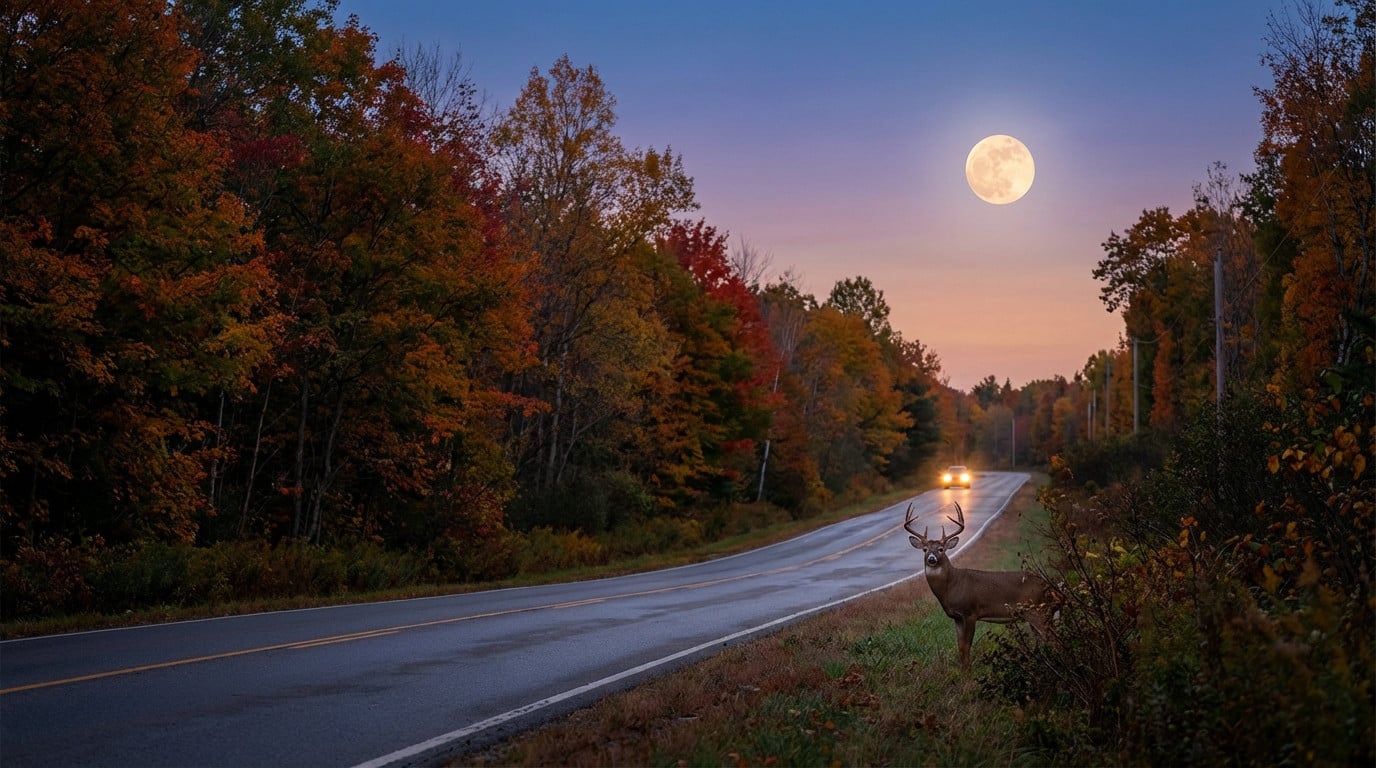
You might expect winter to be worse, but the real danger hits in autumn during the rut. Late October and early November see accident rates spike to four times spring levels.
The risk is staggering—eight times higher at twilight than in broad daylight. It is a nasty mix: deer become hyper-active right when your visibility drops significantly.
Here is a snapshot of the specific danger zones where you need to ease off the gas.
| Factor | Highest Risk Period | Risk Level Multiplier/Comment |
|---|---|---|
| Time of Day | Twilight/Dusk & Dawn | Risk is 8x higher at twilight than daytime |
| Season | Autumn (Oct-Nov) | Accidents can be 4x more frequent than in spring |
| Lunar Cycle | Full Moon | Increased deer activity away from cover |
The Full Moon Effect and the Daylight Saving Trap
Most drivers ignore that full moon nights trigger a massive spike in collisions. Brighter light encourages deer to roam open areas, a pattern documented across North America and Europe.
The end of daylight saving time aggravates this by shifting commuter traffic into high-risk dusk hours. Interestingly, maintaining permanent daylight saving time could potentially reduce these collisions.
We are facing a lethal combination of factors. These conditions should put you on high alert immediately:
- Autumn Mating Season: Increased and unpredictable deer movement.
- Twilight Hours: Peak deer activity coincides with reduced driver visibility.
- End of Daylight Saving Time: Commuter traffic shifts into high-risk dusk hours.
- Full Moon Nights: Brighter conditions encourage deer to roam in open areas.
How to React When a Deer Is in Your Headlights
The Counterintuitive Rule: Do Not Swerve
Here is the golden rule that actually saves lives on the road. You must absolutely resist the urge to swerve when facing a sudden deer car collision risk. It feels wrong, but braking hard while holding the steering wheel straight is the safest maneuver. Trust this instinct.
Jerking the wheel often triggers a scenario much worse than hitting the animal. You risk a total loss of control, rolling over, or smashing into a massive tree. Staying in your lane minimizes these catastrophic outcomes.
Hitting an animal is bad, but a head-on two-vehicle collision is often fatal. Physics always wins.
Proactive Driving and Immediate Post-Crash Protocol
You need to scan the road edges constantly during high-risk hours. Use high beams whenever possible to spot eyeshine early. Remember, if you see one deer, others likely follow right behind it.
If impact is certain, blast your horn to try and scare the beast away. Brake firmly but progressively to scrub off as much speed as possible. Pump your brakes quickly to warn drivers behind you.
When metal meets fur, adrenaline spikes hard. You need a cold, logical plan to handle the aftermath safely. Follow these specific steps immediately to protect everyone involved.
- Pull Over Safely: Move your vehicle to the side of the road and turn on your hazard lights.
- Stay in Your Vehicle: Do not approach the injured animal, as it can be dangerous.
- Contact Authorities: Call the police or emergency services to report the accident.
- Document the Scene: Take photos of the damage for your insurance claim.
Understanding the convergence of autumn, twilight, and deer behavior is crucial for navigating these high-risk periods safely. While the statistics are sobering, adopting proactive driving habits—specifically resisting the urge to swerve—can save lives. Ultimately, staying vigilant ensures we share the road responsibly with wildlife, protecting both passengers and nature.