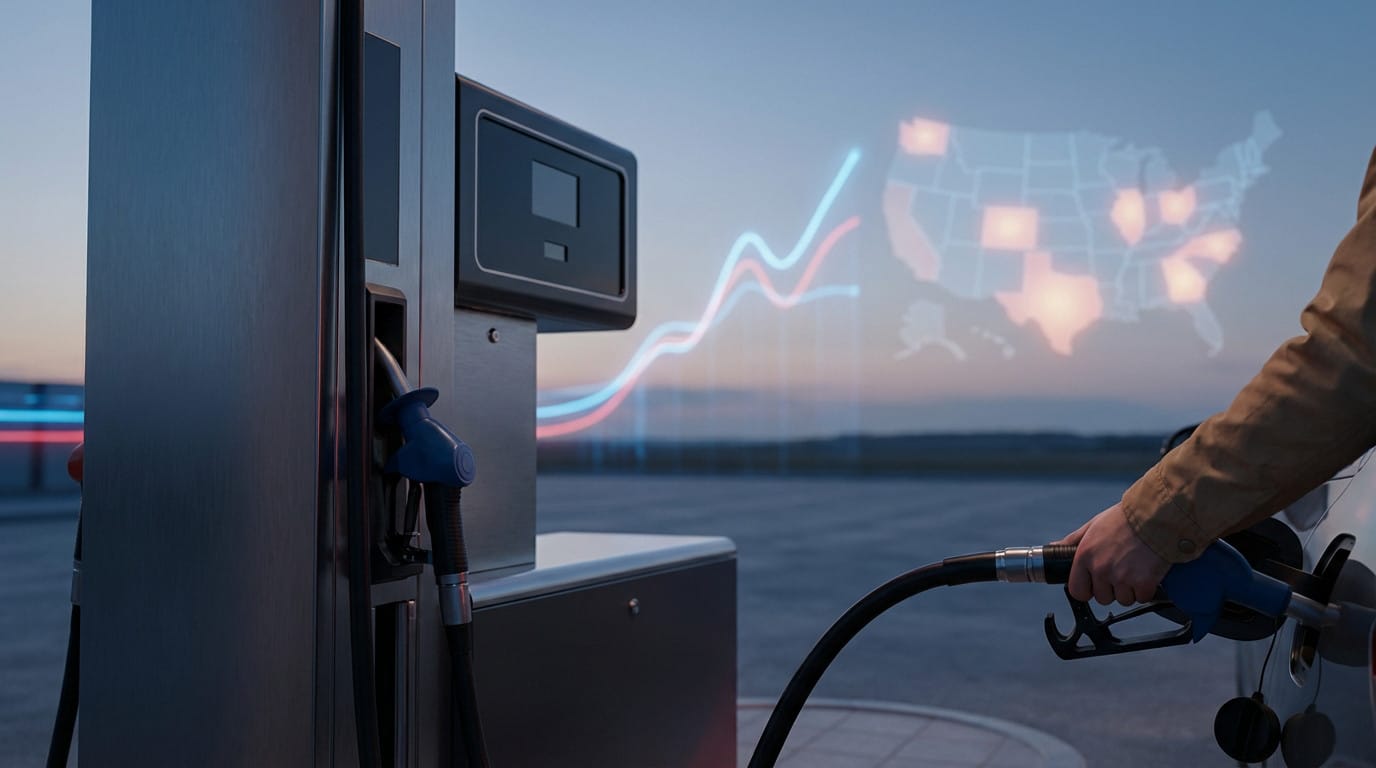
Why does the unpredictable fluctuation of us gas prices frequently threaten to destabilize our monthly budgets? We dissect the economic components defining these costs, moving from the influence of international crude oil demand to local legislative disparities. This report uncovers the mechanisms behind historical highs and provides actionable insights to help you navigate these financial variations with greater foresight.
What You’re Really Paying for at the Pump
Deconstructing the Price per Gallon
That sticker shock isn’t just about raw petroleum costs. It’s actually a cocktail of four distinct expenses hitting your wallet.
Crude oil definitely eats the biggest slice of your dollar. But don’t ignore how quickly the other operational costs stack up. Here is the split:
- Crude oil: 55%
- Refining: 14%
- Distribution and marketing: 16%
- Taxes: 15%
The Great American Price Divide
Geography dictates your pain at the pump more than you might realize. Usually, State taxes and specific environmental mandates are the real culprits behind the gap.
This creates a fragmented map where simply crossing a state line alters your financial reality. You might even encounter unique local regulations that completely shift the pricing dynamic for drivers.
| State | Average Price per Gallon |
|---|---|
| California | $5.850 |
| Kansas | $3.767 |
| US National Average | $4.252 |
Based on data from March 2022.
A Rollercoaster History of Gas Prices
From Record Highs to Inflation-Adjusted Lows
Recent pumps might sting, but history offers a different perspective on value. We hit a nominal record in 2022, yet that is not the whole story.
Actually, the infamous 2008 spike was technically pricier once adjusted for inflation. That era’s cost took a bigger bite out of wallets than even the wildest current us gas prices do right now.
- Record High (June 2022): $4.331 per gallon.
- 2008 Peak (July, inflation-adjusted): Equivalent to $5.30 in 2022 dollars.
- Historical Low (1998, inflation-adjusted): $1.86 per gallon.
The Forces That Move the Needle
Prices don’t just happen; they follow the brutal law of supply and demand for crude oil. The cartel known as OPEC largely pulls the strings on global production.
Then you have chaos. Geopolitical events like the invasion of Ukraine or shocks like the COVID-19 pandemic can flip the market overnight.
The Bigger Picture: US Prices vs. the World
But these fluctuations don’t happen in a vacuum. The price you pay in the US is very different.
How the US Stacks Up Globally
We love to complain, but the truth about us gas prices is surprising. Americans actually pay peanuts compared to other wealthy nations.
The global disparity is frankly wild. While drivers in Hong Kong (over $10/gallon) bleed cash, folks in Iran (under 20 cents/gallon) pay loose change. It strictly comes down to how different governments handle taxes and subsidies.
Taking Back Some Control at the Pump
You cannot fix global oil markets, but you can fix your own consumption. You have more power over your wallet than you think.
Small adjustments boost your vehicle energy efficiency immediately:
- Drive smoothly and respect speed limits.
- Keep tires properly inflated.
- Reduce vehicle weight and avoid prolonged idling.
Understanding the volatility of gas prices reveals a complex web of global markets, taxes, and geopolitical shifts. While we cannot control crude oil fluctuations, recognizing these factors offers valuable perspective. Ultimately, adopting smarter driving habits remains our most effective strategy to navigate this unpredictable landscape and manage our costs at the pump.