Seeing valuable resources continuously pile up in the trash often compels us to seek smarter ways to reuse plastic bottles instead of merely contributing to growing environmental waste. Our discussion highlights practical, inventive methods to convert these everyday containers into versatile solutions for efficient pantry organization, secure shipping, and innovative gardening systems. You will learn how specific cuts and minor adjustments can instantly give a functional second life to your plastics, transforming potential waste into cost-effective tools and engaging creative family projects.
From Clutter to Calm: Smart Storage with Plastic Containers
Taming the Tiny Things
We all have that chaotic junk drawer, right? Small plastic containers, like empty yogurt pots, are the perfect fix. They instantly bring order to the mess without costing a dime.
Instead of losing tiny items in the abyss, give them a home. These pots are surprisingly versatile for organizing odds and ends. You can even use them to keep garlic bulbs fresh and contained inside your refrigerator.
Here is exactly what I recommend stashing in them for a tidier space:
- Wine charms
- Thumbtacks
- Hair elastics
- Loose change
Your Travel and Workspace Sorted
Traveling with full-sized toiletries is a nightmare. If you want to reuse plastic bottles effectively, old pill bottles are ideal for liquids. They save precious luggage space and comply with airport security standards.
On the desk, visual clutter kills productivity. Tall, slim containers—think empty lemonade packet boxes—work wonders for corralling pens, pencils, and markers that usually roll away.
It’s a simple, rugged method to keep your workbench or desk completely organized.
Handling Paint, Pantry, and Leftovers
Don’t let leftover paint dry out in massive cans. Clean peanut butter jars are excellent for storing small amounts of paint, making future touch-ups quick and mess-free.
Buying in bulk saves money, but wrestling with an 11kg bag of rice is annoying. Transfer a manageable portion into a smaller plastic container for daily kitchen use, while the rest stays tucked away.
Finally, durable takeout containers with tight lids are unbeatable for leftovers or keeping sandwiches safe on the go.
Giving Your Garden a Hand With Upcycled Plastic
Now that we’ve tackled the indoors, let’s see how these plastics perform out in the dirt.
The Self-Watering Bottle Trick
You can build a reliable self-watering system using a standard 2-liter soda bottle. It is a dead-simple fix to keep greens hydrated. This works perfectly when you leave for a weekend. No expensive gadgets are required here.
Just drill a tiny hole in the cap. Fill the bottle up, screw it tight, and bury it upside down. This setup waters plants for 2 to 3 days.
For smaller pots, grab a 236-550 ml bottle instead. It fits tighter spaces easily.
Craft a Custom Watering Can
Why buy new gear when you can reuse plastic bottles like a gallon milk jug? Wash a gallon jug thoroughly first. It makes for a solid, no-cost watering can.
Punch small holes in the lid using a hammer and a nail. Don’t forget to poke another hole in the handle for airflow. That air gap ensures the water pours out smoothly. Then, simply fill it up.
A smaller jug is fun for kids wanting to help. It is lighter for them.
From Planters to Bird Feeders
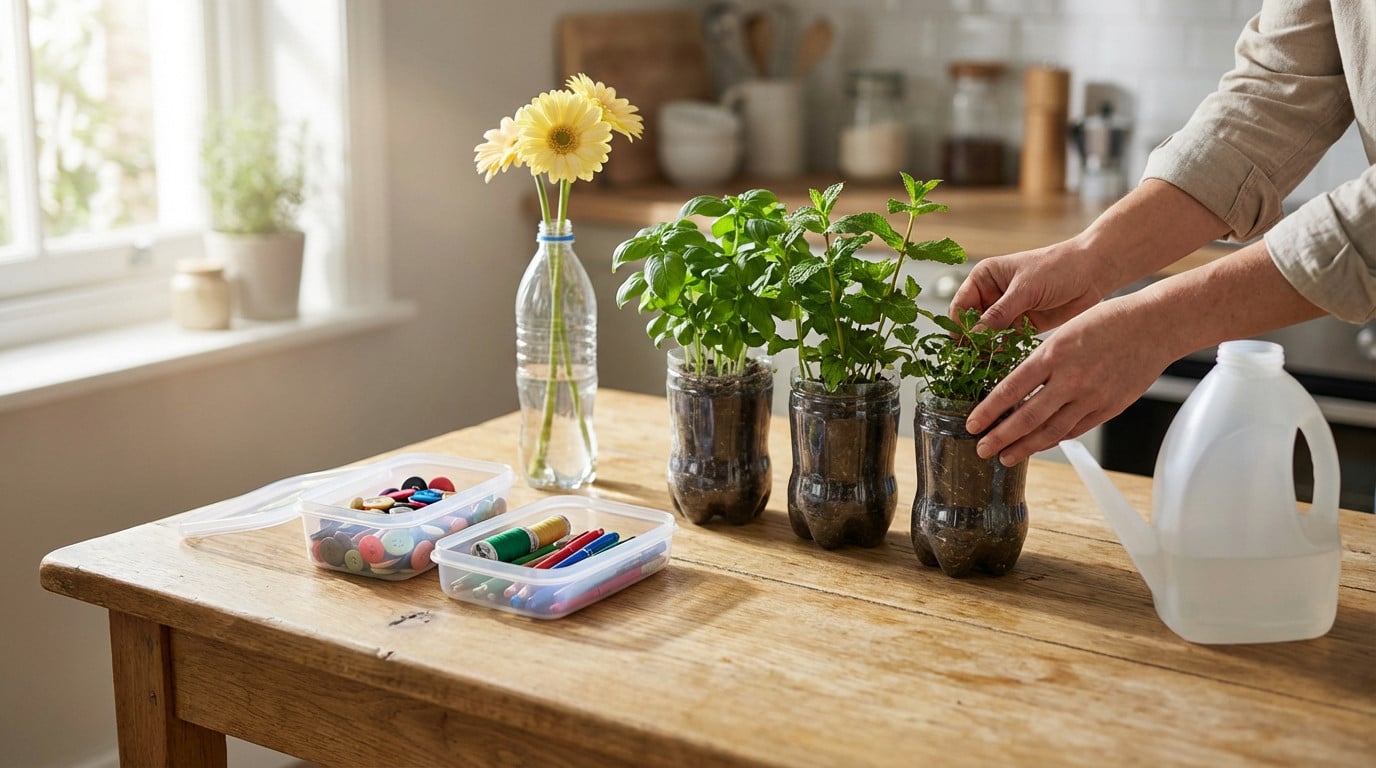
Transform old bottles into vertical planters. This strategy saves serious ground space. It is a really smart way to grow herbs on a balcony.
The cut bottom of a bottle acts as a protective mini-greenhouse. It shields young seedlings from frost.
Finally, try making bird feeders to support local wildlife. Cut openings in the sides and fill the base with seeds. It brings life to your yard instantly. It is a quick project with a big impact.
- A clean plastic bottle (2-liter soda bottle works well)
- A craft knife or scissors
- Two wooden spoons or dowels for perches
- Twine or wire for hanging
- Birdseed
Unleash Your Creativity: DIY Projects for the Whole Family
Beyond practical utility, plastic waste offers a goldmine for imagination. Let’s shift gears from the garden to pure creativity.
Build a Jetpack for Your Little Astronaut
Ever wonder how to turn trash into a space adventure? A DIY jetpack costume transforms ordinary waste into an incredible play accessory. It’s a perfect way to reuse plastic bottles for imaginative fun.
Grab two empty 2-liter soda bottles and spray them with silver paint for the fuel tanks. Cut jagged flame shapes from red and yellow foam or crepe paper.
Glue the bottles onto a stiff piece of cardboard and add straps so your child can wear it like a backpack.
Craft Unique Winter Decorations
You don’t need expensive store-bought ornaments. The wavy bottom of a clear plastic bottle mimics the natural shape of a snowflake perfectly, creating an authentic icy look for almost zero cost.
The process is surprisingly simple.
- Carefully cut off the bottom inch of a clear plastic bottle.
- Decorate the inside of the base with a silver, white, or blue paint marker.
- Drill a small hole at the top.
- Thread a ribbon or hook through the hole.
This decoration is incredibly budget-friendly. Hang them in a window to catch the light or dangle them from a tree for a cozy, handmade charm.
Get Spooky with a Bottle-Bone Skeleton
For Halloween, try building a charming skeleton named “Mr. Bottle Bones” using empty one-gallon milk jugs. This project turns standard recycling bin fodder into a spooky decoration that strikes the right balance between fun and macabre.
The genius lies in using every single part of the jug—handles, body, and bottom—to sculpt the different anatomical bones. Nothing goes to waste in this clever design.
The Smart (and Safe) Way to Reuse Plastic
All these creative ideas are fantastic, but before transforming your recycling bin, there are vital safety points regarding plastics you must know.
Why Reusing Often Beats Recycling
Let’s face the harsh reality. The World Economic Forum reveals that only 14% of global plastic waste is recycled, and barely 2% becomes something as useful as the original.
It comes down to economics. Producing new plastic is often cheaper than the complex recycling process, which remains expensive to scale.
That is why we repurpose plastics. Even extending a bottle’s life by a few months keeps it directly out of the landfill.
Know the Risks: What Not to Do
Safety first: never reuse single-use bottles. The plastic isn’t built for it, and the main risk is bacterial growth in grooves you cannot scrub clean.
Then there is material degradation. Over time, disposable plastics break down physically, potentially leaching chemical compounds into whatever you store inside.
For non-food projects, give everything a thorough cleaning first. Hot water and soap are non-negotiable before you start crafting.
| Container Type | Safe Reuse Ideas | Uses to Avoid & Why |
|---|---|---|
| PET/PETE (Soda/Water bottles) |
Watering plants, crafts, bird feeders. | Do not reuse for drinking. Hard to clean; high bacterial risk. |
| HDPE (Milk/Detergent jugs) |
Watering cans, scoops, non-food storage. | Not ideal for food unless sterilized. Avoid harsh chemicals. |
| PP (Yogurt/Takeout) |
Drawer organizers, paint pots, seed starters. | Avoid microwaving. Can warp or leach chemicals when heated. |
Clever Hacks for Plastic Jugs and Clamshells
Create Your Own Custom Scoops
Stop guessing your pet’s dinner portion size. Grab a plastic container, measure the exact daily amount inside, and mark that level clearly. Slice the plastic right at your line for a custom tool. It’s a precise, free pet food scoop.
You can also tackle the messy yard work. An empty laundry detergent bottle makes a robust dog poop scoop. Just grab a sharp blade to remove the container’s bottom section.
Be sure to keep the handle intact for an easy grip. It simplifies the scooping process.
Rethink Your Gift and Food Packaging
Don’t buy new Tupperware for parties. Rigid clamshell containers are perfect for transporting sticky appetizers safely. They prevent leaks and you won’t worry about leaving them behind.
Salad boxes work wonders for gifting seasonal cookies. To keep crumbs from escaping the air vents, simply line the interior with wax paper or clever aluminum foil sheets. This trick keeps everything fresh and presentable.
It offers a personal, sustainable way to present a gourmet gift. Your friends will love it.
Protect Your Precious Items for Shipping
Shipping breakables is often a risky gamble. Place your delicate items inside a sturdy plastic container before dropping them into the main shipping box. This simple step creates a hard barrier against rough handling. It beats cardboard alone.
The plastic acts as a second protective shell. You just need to cushion it with bubble wrap or shredded paper. It ensures the package arrives intact.
Transforming everyday plastic waste into functional treasures offers a creative path to a more organized and sustainable lifestyle. Whether we are crafting whimsical garden decor or streamlining a cluttered workspace, these simple acts of reuse make a tangible difference. We encourage you to see the potential in every empty container before discarding it.