Does the unsightly discoloration settled deep between your tiles turn the necessary chore to clean grout into a source of constant frustration? We examine a complete range of restoration methods, detailing how simple household ingredients or powerful steam applications can safely revitalize your surfaces. Uncover the precise techniques and safety measures that allow you to eliminate stubborn mold and reclaim that pristine finish without damaging the delicate mortar.
Starting With the Gentle Approach
The Simple Hot Water Scrub
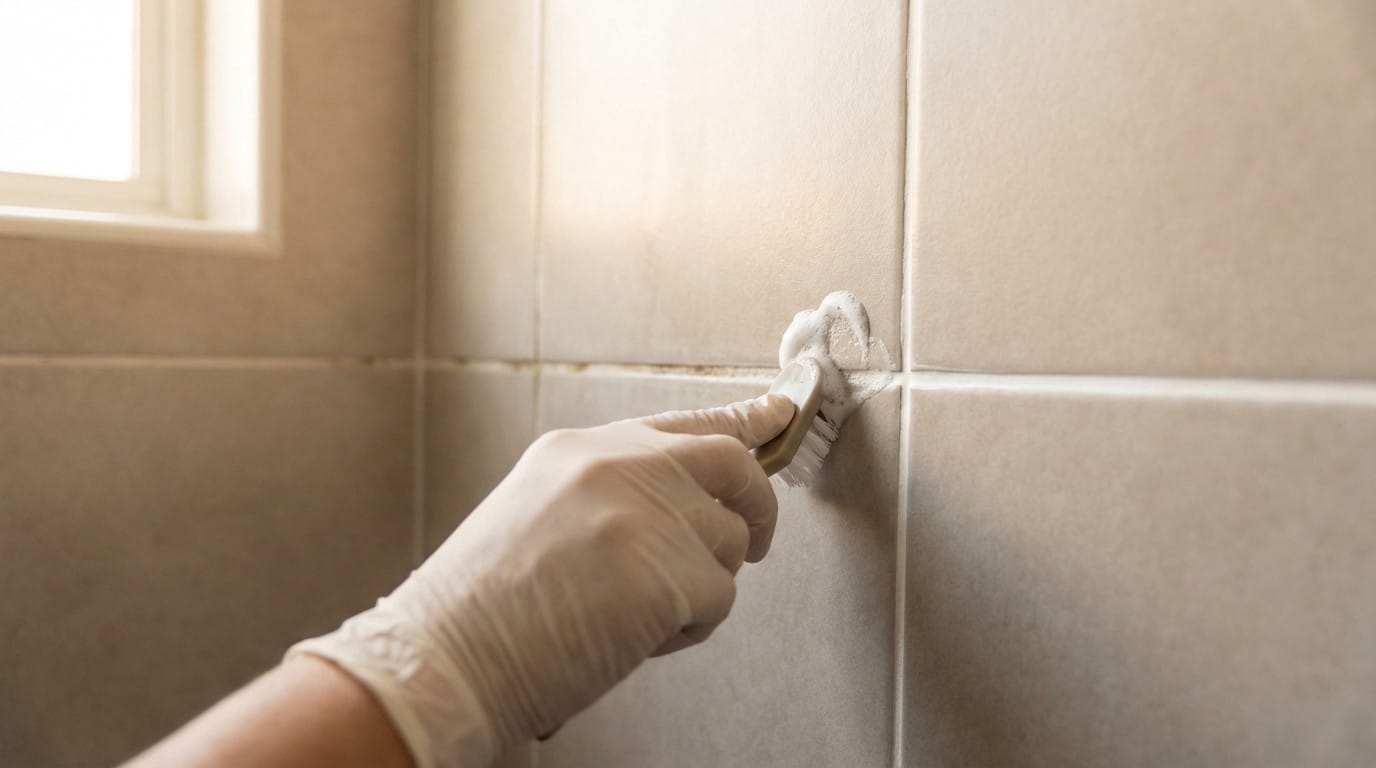
Let’s be honest, the smartest way to clean grout usually starts with the simplest method available. Just mist warm water directly onto the lines to get them damp. Let the water sit there for a moment.
Now, grab a nylon brush that has soft or medium bristles. Scrub the grime using circular motions to loosen up that surface dirt. You must wipe the spot completely dry immediately. This is how you prevent mold growth.
This gentle tactic is ideal for regular maintenance. It handles light messes easily.
- Rubber gloves for protection
- Nylon brush (an old toothbrush works well)
- Spray bottle
- Clean cloths or microfiber towels
The Controversial Vinegar Solution
Vinegar is a tougher option, but here is a serious warning. It is acidic and can dissolve grout, especially if your sealant isn’t fresh. In fact, plenty of tile pros warn people to stay away from it.
If you accept the risk for a nasty stain, mix equal parts white vinegar and hot water. You absolutely must test on a small hidden area first.
Here is the big rule. Never use vinegar on natural stone like marble or granite, as the damage is permanent.
Leveling Up With Powerful DIY Pastes
If gentle methods failed, it is time for robust homemade pastes that attack ingrained dirt.
Baking Soda: The Versatile Workhorse
Baking soda and water form a safe, gritty paste to clean grout grime. Mix three parts powder with one part water until it feels thick. It really is that simple.
For sealed grout, slather on the paste and spray a vinegar-water mix. The effervescent reaction bubbles up to lift deeply embedded dirt. Scrub the area with a nylon brush. Finally, rinse everything away.
Watch out with unsealed grout surfaces. Stick to the paste only and skip the vinegar.
The Expert’s Choice: Baking Soda and Hydrogen Peroxide
This combo is the heavy hitter for stubborn stains that refuse to leave. It works wonders whether your grout is sealed or completely unsealed. You will see the difference.
Spread the paste over the lines. Brush lightly to push it in, then let it sit briefly. Rinse it off and wipe dry. It is one of those surprising cleaning hacks that actually delivers.
Baking soda acts as a mild abrasive here. The peroxide serves as a powerful oxygen bleach to whiten.
When to Call in the Heavy Hitters
Sometimes, even the best homemade pastes won’t cut through the grime. That’s when we need to bring in the intensive solutions.
Commercial Cleaners and Steam Power
Commercial cleaners are your last resort for deep-set, stubborn mold stains. These specialized options dissolve grime on contact.
Safety is non-negotiable. Ventilation and gloves are mandatory. Mishandling strong agents—like in caustic soda cleaning—is dangerous, so follow instructions precisely.
For a powerful, chemical-free alternative, steam cleaning is ideal. It avoids damage from harsh cleaners while sanitizing surfaces.
Choosing the Right Tool for the Job
Steam cleaners heat water to over 200°F (93°C), blasting vapor to dislodge trapped dirt.
The catch? Intense heat strips sealant. Be prepared to reapply a protective coat after you clean grout this way.
Ultimately, the stain dictates the method. As Wirecutter notes, mold responds to alkaline cleaners, while limescale requires acidic products.
| Method | Best For | Risk Level | Key Precaution |
|---|---|---|---|
| Hot Water | Light dirt, regular upkeep | Very Low | Dry thoroughly to prevent mold. |
| Vinegar & Water | Mild stains on sealed grout | Medium | Acidic; can damage unsealed grout. Test first. |
| Baking Soda & Peroxide | Tough stains, whitening | Low | Very effective, but always rinse well. |
| Steam Cleaning | Deep cleaning, sanitizing | Low (Chemical) | Removes grout sealer, requiring reapplication. |
| Commercial Cleaners | Deep-set mold, stubborn stains | High | Follow instructions precisely; ensure ventilation. |
Maintaining pristine grout requires a balance between gentle maintenance and targeted deep cleaning. Whether we rely on simple hot water or powerful DIY pastes, the key lies in regularity and choosing the appropriate method for the surface. By protecting the grout with a quality sealer, we ensure lasting durability and easier future cleanups.