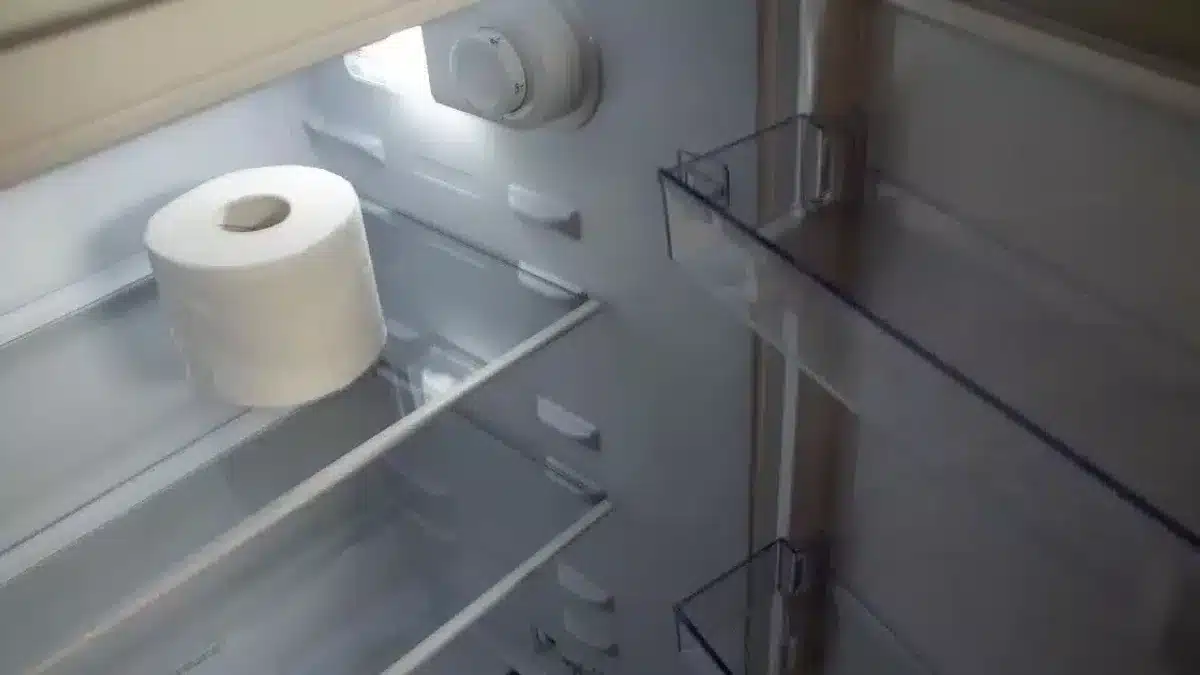
Placing a single roll of toilet paper inside your fridge sounds absurd — until you understand the science behind it. TikTok influencer Jonathan Coni popularized this low-cost trick, claiming it cuts electricity bills and keeps the refrigerator running more efficiently. The mechanism is simpler than it seems, and the results are hard to ignore.
The idea went viral for a reason. Most households deal with excess moisture inside their fridge without ever identifying it as a problem. And that hidden humidity, left unchecked, quietly drives up energy costs, accelerates food spoilage, and forces the compressor to work overtime. A single unscented toilet paper roll, placed correctly, addresses all three issues at once.
How toilet paper absorbs fridge humidity and reduces energy consumption
The material doing the heavy lifting here is ouate de cellulose, the soft, fibrous pulp that makes up standard toilet paper. Its structure is highly porous, giving it exceptional moisture-wicking capacity. When placed inside a refrigerator, it passively draws in excess humidity from the surrounding air — no batteries, no chemicals, no special equipment required.
The compressor connection
Excess moisture inside a refrigerator forces the appliance to work harder. When humid air circulates through the cooling system, it accelerates frost buildup on the evaporator coils. The compressor then cycles on more frequently to compensate, consuming more electricity with each cycle. By absorbing that excess moisture, the toilet paper roll directly reduces the frequency of those compressor cycles. Less cycling means lower energy consumption, and lower energy consumption means a reduced electricity bill over time.
Frost reduction and food preservation
Reduced humidity also means reduced frost accumulation. That matters more than most people realize. Frost buildup insulates the coils, forcing the system to run longer to reach the target temperature. Eliminating excess moisture at the source keeps the interior drier, which is also better for fresh produce. Fruits and vegetables stored in a high-humidity environment deteriorate faster — excess condensation encourages mold and bacterial growth. A drier fridge interior translates directly to better food conservation and less waste. If you're already thinking about moisture management in the home, this trick extends that logic to one of the most energy-hungry appliances in your kitchen.
The right way to place a toilet paper roll in the fridge
Getting the placement right determines whether this trick actually works. Jonathan Coni is specific about this: the roll goes on a clean, dry shelf, positioned toward the back or the side of the refrigerator. Both locations benefit from better air circulation than the front of the shelves, which means the roll absorbs moisture more effectively.
Never use scented toilet paper rolls inside the fridge. The fragrance compounds can transfer directly to stored food, creating unpleasant odor combinations or altering the taste of uncovered items.
The roll must never rest directly against a wet or condensation-covered surface. Contact with standing moisture saturates the roll almost immediately, rendering it useless as an absorbent. The goal is to let it work through air contact, not direct liquid absorption.
Checking the roll every few days is the maintenance routine Coni recommends. Once the roll feels damp or visibly saturated, it gets replaced. Discard the used roll, set a fresh one in place, and repeat. The process costs almost nothing and takes under a minute.
One standard, unscented, high-absorbency roll is all you need. There’s no benefit to placing multiple rolls — one positioned correctly in a well-ventilated spot does the job.
Odor elimination as a secondary benefit
Beyond moisture control, the cellulose structure of toilet paper also traps odor molecules. A fridge that accumulates smells from leftovers, aged cheeses, or raw proteins benefits from a passive deodorizing effect. The roll doesn't mask odors with a competing scent — it absorbs them, which is why the unscented version is non-negotiable. This makes it a genuinely practical alternative to expensive deodorizing products or baking soda, which also works on the same absorption principle but requires a dedicated container. The toilet paper in the fridge trick offers both functions simultaneously.
Maintaining door seals and shelf organization for maximum efficiency
Jonathan Coni pairs the toilet paper trick with two additional maintenance habits that compound its effectiveness. The first involves the door seals. A rubber gasket that has stiffened, warped, or cracked no longer creates an airtight closure. Cold air escapes, warm humid air enters, and the compressor compensates by running longer. The fix is straightforward: use a hair dryer on a low heat setting to gently warm the rigid or deformed seal. The rubber softens, regains some flexibility, and conforms better to the door frame. Wiping the seals regularly and verifying that the door closes hermetically should become routine.
Shelf organization and airflow
The second habit is shelf management. Overloaded shelves restrict the circulation of cold air throughout the refrigerator interior. When air can't move freely, temperature distribution becomes uneven, certain zones warm up faster than others, and the compressor works harder to maintain the set temperature. Leaving deliberate space between items on each shelf allows cold air to circulate properly.
- Absorbs excess humidity passively, no products needed
- Reduces compressor cycling and electricity consumption
- Eliminates odors without chemical deodorizers
- Improves food conservation and reduces waste
- Extremely low cost and easy to implement
- Scented rolls can transfer fragrance to stored food
- Saturates quickly if placed against wet surfaces
- Requires checking and replacing every few days
Combined with the toilet paper roll trick, these two habits address the three main sources of energy inefficiency in a standard household refrigerator: excess internal humidity, compromised door seals, and restricted airflow. None of these fixes require a technician, specialized products, or significant expense. The investment is a roll of toilet paper and a few minutes of attention every week — and the long-term reduction in energy costs makes that investment worthwhile.