Do we truly accept that millions of students still inhale toxic diesel exhaust every morning, unknowingly compromising their developing lungs and long-term well-being before the first bell even rings? As the electric school bus transition gains momentum across the country, it offers a tangible solution to this invisible threat, replacing noisy combustion engines with silent, zero-emission technology that benefits entire communities. This analysis explores how swapping the iconic yellow fleet for green alternatives goes beyond environmental stewardship to unlock significant financial savings and drive social equity for our most vulnerable school districts.
More Than Just a Yellow Bus: The Health and Climate Imperative
Clearing the Air for the Next Generation
It is alarming that 95% of the 480,000 school buses in America still chug along on diesel. The electric school bus transition is urgent because 20 million kids use them daily. Worse, pollution inside can be up to 12 times higher than outside.
We are not just talking about bad smells here. These fumes link directly to chronic health struggles, hitting children hardest because their lungs are still developing and they breathe faster than adults.
Take New York as a prime example. Going fully electric there could prevent a staggering 159,000 asthma attacks annually. These health issues often force kids into isolation, missing out on life.
Sadly, health struggles often trigger other difficult ordeals at school, creating a cycle that goes beyond physical symptoms.
Slashing Emissions One School Route at a Time
Zoom out to the national picture, and the stakes get higher. Transportation stands as the top contributor to U.S. greenhouse gas emissions. Heavy-duty vehicles, like buses, are responsible for over 25% of that mess.
The potential impact is massive. Electrifying the entire school bus fleet could cut greenhouse gas emissions from all American buses by roughly 50%. That means avoiding 4.8 million tons of GHG and over 317,000 kilograms of air pollutants every single year.
We are specifically targeting the nasty stuff spewed by diesel engines. To protect our communities, we need to eliminate these primary culprits:
- Fine Particulate Matter (PM2.5)
- Nitrogen Oxides (NOx)
- Carbon Monoxide (CO)
The Dollars and Sense of Going Electric
But breathing cleaner air comes at a cost. So, how are we funding this electric school bus transition, and does the math actually work?
Following the Money: Federal and State Initiatives
Let’s look at the funding. The Biden infrastructure plan allocated a massive $5 billion specifically for clean school buses. It is a solid start. Of that total, $2.5 billion targets zero-emission vehicles exclusively.
The EPA manages these funds via the Clean School Bus Program. They are moving fast. Nearly $3 billion has already been awarded to eager districts.
Still, this is far below the initial $174 billion proposal. States are scrambling to fill the void. Cumulative state funding jumped from $268 million in 2020 to $2.47 billion in 2025. It represents a major shift.
The Long-Term Financial Payoff
The upfront price tag is undeniably steep. A new electric rig costs between $300,000 and $400,000. That premium is daunting for many. Thankfully, subsidies help close that massive gap.
However, the long game wins. Electric buses slash daily operating expenses. Districts can save over $10,000 annually per bus. The superior vehicle energy efficiency of electric motors makes it possible.
| Feature | Diesel Bus | Electric Bus |
|---|---|---|
| Initial Purchase Cost | ~$120,000 | ~$350,000 (before subsidies) |
| Annual Fuel/Energy Cost | ~$15,000 | ~$4,500 |
| Annual Maintenance Cost | High (engine, oil, exhaust) | Low (fewer moving parts) |
| Tailpipe Emissions | NOx, PM2.5, CO2 | Zero |
| Health & Climate Benefits (per bus, lifetime) | N/A | $84,200 (average) |
A Nationwide Shift: Mapping the Adoption and Equity
From Coastal Trend to Heartland Reality
Back in 2020, this looked like a niche West Coast experiment. You really only saw these quiet yellow giants in one specific area. In fact, at that time, California represented 80% of all committed electric buses. It felt completely isolated from the rest of the country.
Fast forward to 2025, and the picture has shifted drastically. We aren’t just watching California anymore; electric buses are rolling in 49 states, the District of Columbia, and across tribal nations. The total number of committed buses has multiplied by ten since 2020, now surpassing 13,900 vehicles.
The electric school bus transition has leveled the playing field regionally. It is no longer just a coastal phenomenon. Here is the breakdown of adoption across the country in 2025:
- The South: 31%
- The West: 33%
- The Northeast: 21%
- The Midwest: 15%
Addressing the Equity Gap
Let’s be honest about the cost of dirty air. Historically, communities of color and low-income neighborhoods are more exposed to pollution than anyone else. Consequently, these families suffer from significantly higher asthma rates compared to wealthier areas.
This hits hard because 60% of students from low-income families rely on the school bus to get to class. They are the ones breathing that exhaust. This shift is about far more than technology; it is a matter of basic equity.
Fortunately, federal initiatives like the Clean School Bus Program are tackling this head-on by prioritizing disadvantaged districts for grants. This targeted funding has successfully boosted the share of electric buses in these communities. As experts note, switching to electric buses yields significant health benefits that are particularly vital for these vulnerable populations.
Powering the Future: Beyond the School Run
The change is happening, and it is fairer. But the potential of these buses does not stop when the students get off.
Buses as Batteries on Wheels
Here is a secret: these vehicles are massive batteries waiting to be used. This concept, called Vehicle-to-Grid (V2G), fits school buses perfectly thanks to their huge capacity and highly predictable schedules.
Think about it. These buses sit idle for hours during the school day and all summer long. During these downtimes, they can send energy back to the electrical grid, especially when demand peaks and the system is stressed.
If districts ignore this, they are literally leaving money on the table. V2G offers specific, high-value perks:
- Generate a new revenue stream by selling energy back to the grid.
- Provide backup power for schools.
- stabilize the local power grid.
The Road Ahead: Performance and Partnerships
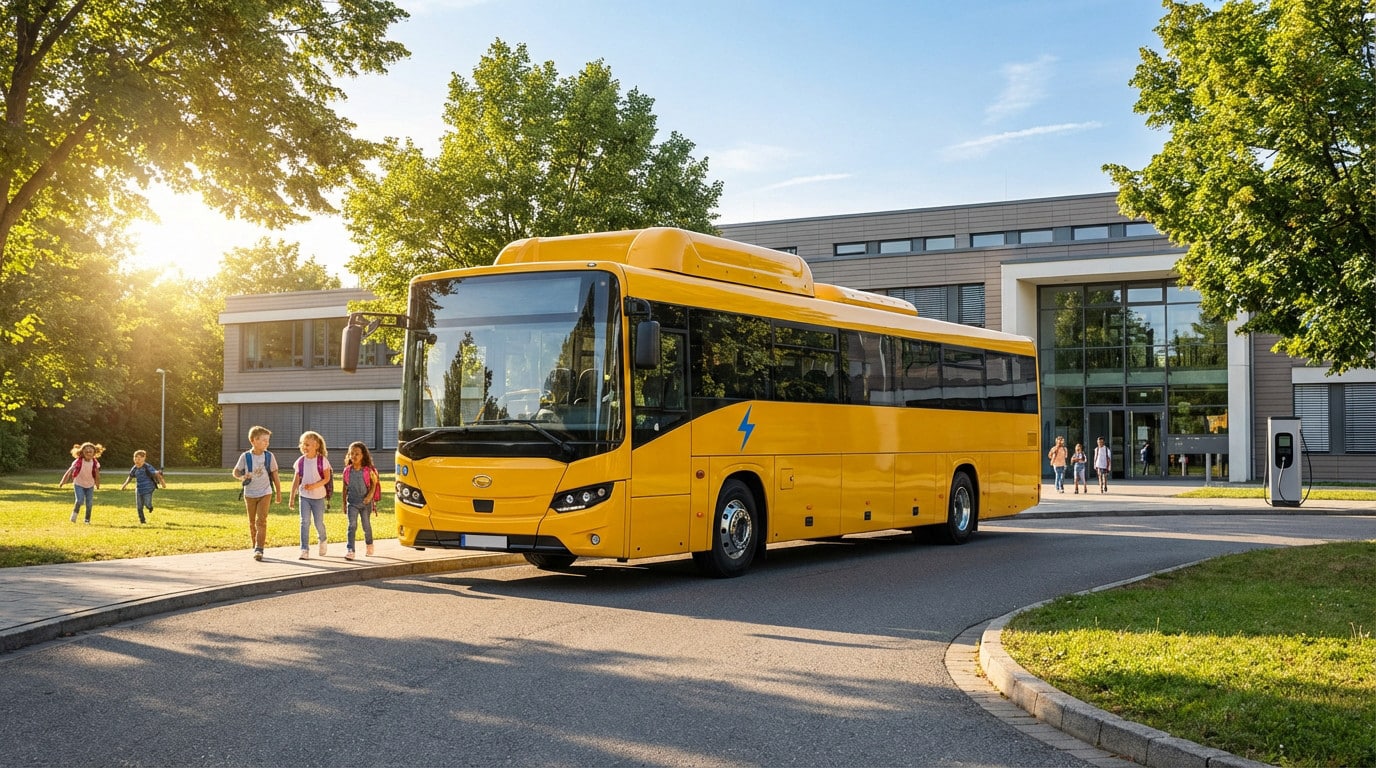
The electric school bus transition destroys range anxiety. The market now boasts 26 models, some hitting 300 miles—far exceeding the daily 80km average. Plus, a 120kW DC charger handles a full top-up in just 90 minutes, keeping fleets moving.
Real-world feedback is solid. Drivers quickly master regenerative braking to recapture power. Students? They love the silent ride. It’s not just comfort; it actually improves safety by significantly lowering distraction levels inside the cabin, making the run smoother.
We can’t do this alone. Long-term success depends on tight partnerships with Utilities. They are essential for planning heavy charging infrastructure and unlocking the full grid-stabilizing potential of V2G technology.
This electric transition plays a major role in safeguarding student health while modernizing our grid. As we embrace this shift, it brings a sense of collective progress to every district. All it takes is sustained commitment to ensure these yellow buses drive us toward a cleaner, quieter future for everyone.