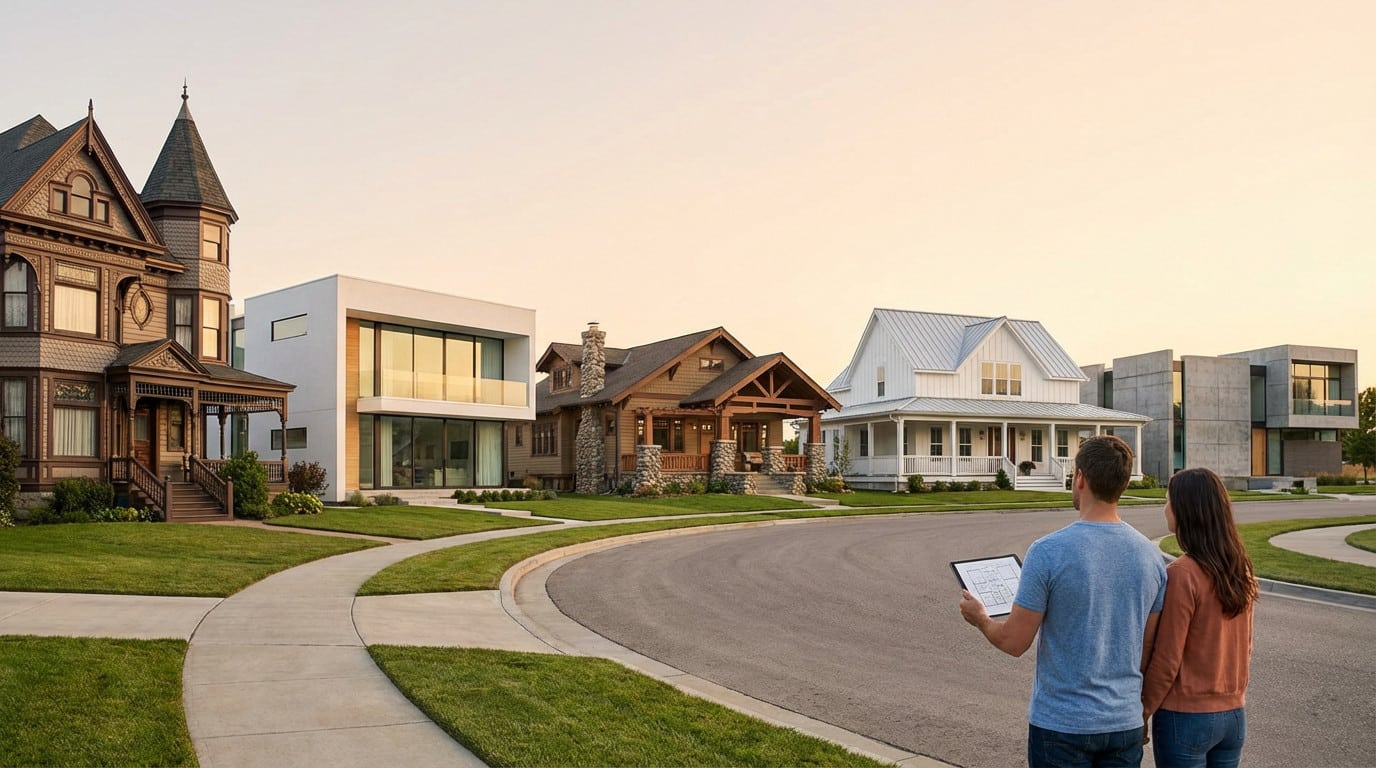
Confronting the overwhelming diversity of real estate listings often leads to hesitation, as prospective buyers struggle to align their specific needs with the correct building structure. We simplify this selection process by detailing thirteen distinct house architectural styles, analyzing how unique features like the steep roofs of a traditional Cape Cod or the open layouts of a Midcentury Modern home directly influence daily living. This comparative overview equips you with the architectural literacy necessary to confidently distinguish between aesthetic preference and practical design, ensuring your final choice harmonizes historical character with contemporary expectations for comfort.
The American Classics: Foundational Residential Styles
Detached Single-Family Homes: The Quintessential Choice
A detached single-family home stands on its own land, sharing no walls with neighbors. This setup prioritizes privacy and personal space, a luxury often lost in attached units. It remains the most common housing type across the United States. Families naturally gravitate toward this autonomy.
You see these structures ranging from single-story builds to multi-level designs. The real draw is the exclusive access to outdoor spaces like private backyards. It offers breathing room that condos just can’t match.
Ultimately, you get full ownership and control over the property. It is the gold standard for independent living.
Ranch-Style Homes: Post-War Practicality
Gaining fame after World War II, the Ranch style defined suburban expansion. These homes feature a distinct single-story layout and a long, low profile. They brought a casual vibe to house architectural styles of the era.
Inside, the focus shifts to airy open floor plans that ditch formal separation. Sliding glass doors often connect living areas directly to the patio, blending inside and out. Exteriors typically mix brick or stone with low-pitched roofs. It is all about functional simplicity.
Their enduring appeal lies in accessibility and the ease of stair-free living. It promotes a simple lifestyle that many still crave.
Cape Cod Homes: Coastal Charm and Resilience
Originating on the East Coast, these homes were built to withstand brutal winters. The design is compact and symmetrical, often featuring a central door flanked by windows. It is a practical response to the local climate.
You can spot them by their steeply pitched roofs and charming dormer windows. That sharp roof angle isn’t just for looks; it sheds heavy snow and rain efficiently. This functional design keeps the structure safe during storms. It is smart engineering wrapped in tradition.
Today, you see them frequently in suburban subdivisions. Their cozy, efficient footprint makes them a timeless choice for many homeowners.
Echoes of History: European-Inspired Architecture
Colonial-Style Homes: A Timeless American Staple
This style draws directly from the architecture of early European settlers. You will notice the shape is almost always rectangular and perfectly symmetrical. The clean lines define its classic look.
Look for a centered front door flanked by decorative elements and classic dormers. These homes typically span multiple stories to maximize the interior living space. They rely heavily on distinctive types of windows to establish their specific character.
To me, this design projects an undeniable sense of order and strict formality. It screams tradition in the best way possible.
Victorian Homes: Ornate and Asymmetrical
These distinctive homes emerged during the height of the Victorian era. You might recognize famous sub-styles like Queen Anne and Painted Ladies from historic postcards.
They embrace a flamboyant aesthetic filled with ornate details and totally asymmetrical facades. You see steep roofs paired often with bold, bright, unexpected colors. Tall, narrow windows complete the unique, vertical look.
We are talking about spectacular homes full of drama. They possess more personality than almost any other architectural style.
Craftsman Homes: Celebrating Natural Materials
This architecture stems directly from the influential Arts and Crafts movement. It prioritizes raw, natural materials like wood and stone over cold industrial perfection.
Spot them by their exposed wooden beams, decorative brackets under the eaves, and a welcoming covered front porch. The term “Craftsman” actually covers both the exterior architecture and the interior details.
It’s a philosophy that values honest, artisanal work above all else. Structural honesty is the main selling point.
The Modern Evolution: Clean Lines and New Forms
Forget the heavy ornamentation of the past. The 20th century redefined our habitat with approaches that were far more stripped-back and functional, prioritizing how a home works over how it looks.
Modern Farmhouse: Rustic Meets Contemporary
It’s the design shift most buyers seem to want. This style fuses traditional rustic charm with sharp, modern lines. It is one of the most popular house architectural styles today.
You will often see white stucco walls or vertical siding here. Metal roofs and large windows define the exterior look. Builders combine these traditional materials with a totally updated aesthetic. The result feels fresh yet familiar.
The vibe creates a space that feels cozy and welcoming. It remains resolutely contemporary without losing that homey warmth.
Midcentury Modern Homes: Function and Flow
Emerging between 1945 and 1970, this movement changed everything. Architects placed simplicity and functionality above all else. They stripped away ornamentation to focus on how people actually lived.
Expect rectangular forms and massive glass walls that blur inside and out. Open living spaces encourage flow between rooms. Flat roofs are common, often exploring new materials and technologies to connect with nature.
This style represents a quest for an uncluttered existence. It offers a clean, streamlined way of living that still feels surprisingly relevant.
A-frame Homes: The Iconic Vacation Retreat
You can spot these structures from a mile away. A steeply sloped roof descends almost to the ground. This distinctive triangular shape mimics the letter “A” perfectly.
That sharp angle isn’t just for looks; it serves a clear purpose. The form allows heavy snow to slide off easily without damage. It makes them ideal for mountain regions or snowy vacation resorts.
Inside, you get dramatic vaulted ceilings that create volume. Open living areas often feature a cozy loft sleeping space above.
Urban Living and Shared Spaces
Townhouses: Vertical Living in the City
A townhouse is a multi-floor home sharing walls with neighbors. It’s a staple in urban areas where land is pricey, representing one of the most efficient house architectural styles for city dwellers.
Think of it as the middle ground. You get more square footage than an apartment, yet you sacrifice the total privacy of a detached home. Most units feature a private street-level entrance and a modest backyard or patio.
It’s a smart compromise. You maintain a sense of ownership and space without needing a massive plot of land.
Duplex and Multi-family Homes: Investment and Co-living
A duplex is a single structure divided into two distinct living units. These can be arranged side-by-side like semi-detached houses or stacked one on top of the other.
When you add more units, you get triplexes or quadruplexes. These structures are brilliant investment properties or solutions for multi-generational families who want to stay close while keeping their own front doors.
The real kicker? You can live in one unit and rent out the others. It’s a classic strategy to offset your mortgage with someone else’s rent check.
Co-ops vs. Condominiums: A Tale of Two Ownerships
Here is where things get technical. With a condominium, you own the real estate of your unit. In a co-op, you aren’t buying property; you are buying shares in the entire building, granting you a lease to live there.
Both styles dominate the skyline in dense metropolitan centers. They appeal to buyers who want shared maintenance responsibilities and access to amenities like gyms or doormen that single homes lack.
But don’t ignore the fine print. The ownership model dictates everything from how you renovate to who your neighbors are, making the buying process vastly different for each.
| Type | Ownership Model | Typical Location | Key Advantage | Key Consideration |
|---|---|---|---|---|
| Townhouse | Own unit + land beneath it | Urban/Suburban | More space & privacy than a condo | Responsibility for exterior maintenance |
| Duplex/Multi-family | Own the entire building with multiple units | Suburban/Urban | Potential rental income | Landlord duties |
| Condominium | Own the individual unit, share common areas | Dense urban centers | Fewer maintenance worries | HOA fees and strict rules |
| Co-op | Own shares in a corporation, not real estate | Dense urban centers | Often lower purchase price | Board approval required for everything |
Innovative Construction and Modern Solutions
You might assume all construction happens on-site. Think again. Massive sections are built in a factory, then shipped and assembled right on the final plot.
Prefabricated and Modular Homes: Built Off-Site
This streamlined process changes the game. It makes homes significantly faster and more economical to build than stick-built options. Forget the old stigma about poor quality. These structures often beat traditional builds in durability.
The market offers incredible variety today. Options range from budget-friendly starters to completely bespoke, high-end luxury designs.
Understanding Key Construction Differences
Real estate jargon gets messy here. People often confuse modular, prefabricated, and panel-built homes. Let’s clear up exactly what these terms actually mean for buyers.
Your choice of method impacts everything. It dictates the final cost, the project timeline, and your specific customization limits.
- Modular: Volumetric sections (modules) are built and transported to the site.
- Prefabricated (Prefab): The general umbrella term for any home with components made off-site.
- Panel-built: Only the wall panels are constructed in a factory and assembled on a traditional foundation.
- Manufactured (Mobile Home): Built on a permanent steel chassis, making it technically movable.
Technology is moving fast, though. The strict lines between these categories are blurring more every year.
The Rise of Unconventional Housing
Buyers are ditching tradition for innovation. We see a huge surge in Tiny Houses and shipping container homes. Even earth-sheltered structures are gaining serious traction.
Each style targets a very specific need. Tiny Houses offer radical minimalism for freedom. Containers focus on smart upcycling of steel. Earth homes deliver massive energy efficiency. It is about matching the home to your values.
These designs are not just random architectural quirks. They represent bold, creative ways to repurpose materials for sustainable modern living.
How Region and History Shape Architectural Identity
You might think a specific house architectural style is just about curb appeal, but it’s actually a survival strategy. Take A-frame homes: that steep roof isn’t a fashion statement; it’s physics designed to shed heavy snow in mountain regions.
Similarly, look at the thick stucco walls and red clay tiles of the Spanish Colonial Revival style. They keep interiors cool under the baking sun, which is why they are common in regions with a Spanish heritage like Florida and California.
It also comes down to what’s in the backyard. If a region has abundant timber, stone, or clay, that’s exactly what defines the local vernacular.
The Influence of Climate and Geography
Architecture is basically history frozen in time. You can’t separate the ornate Victorian style from the reign of Queen Victoria herself; the buildings are a direct product of that specific cultural moment.
These structures mirror the technology and values of their day. The massive, imposing grandeur of the Beaux-Arts style, for instance, perfectly captures the immense wealth and soaring aspirations of the Gilded Age.
Understanding this context changes everything. It gives a home a story, adding layers of meaning beyond just square footage.
When Historical Periods Define a Style
Styles don’t stay put; they migrate and evolve. A Craftsman bungalow in California feels distinct from its British roots.
- Japanese Minka: Inspires modern minimalist designs focused on wood, paper, and harmony with nature.
- Dutch Canal Houses: Their tall, narrow footprint influences contemporary urban infill projects.
- Italian “Cinque Terre” Homes: The use of vibrant, bold colors on dense housing is a visible trend in some new communities.
Today’s best architects aren’t purists. They borrow elements from these global traditions to create hybrid designs that look unique but feel familiar.
- Key Takeaway 1: A style’s name often hints at its origin, but its execution is almost always local.
- Key Takeaway 2: Understanding the “why” behind a style (climate, history) is more revealing than just memorizing its features.
- Key Takeaway 3: The best architectural designs blend historical respect with modern living needs.
Navigating this diverse architectural landscape reveals that a home is far more than a mere structure; it is a profound reflection of history, geography, and lifestyle. Whether we seek the solitary charm of a detached classic or the communal efficiency of urban living, understanding these distinct styles empowers us to discover the sanctuary that truly resonates with our personal narrative.