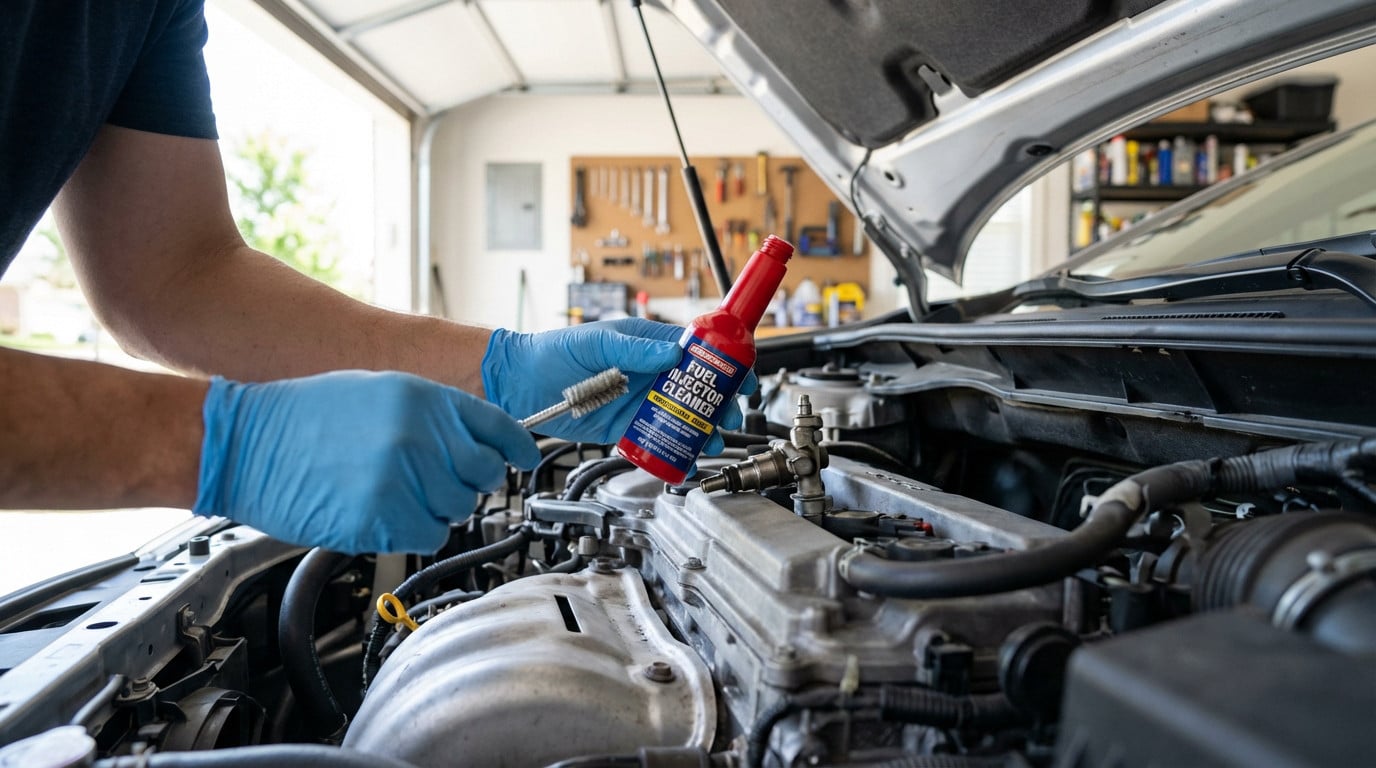
Is a sluggish engine or plummeting fuel economy silently draining your wallet? Mastering how to clean car fuel injectors at home provides a direct path to restoring your vehicle’s power without a costly mechanic bill. We detail the specific DIY techniques that banish stubborn deposits and revitalize your driving experience.
Spotting the Signs of Clogged Injectors
Your Engine Is Trying to Tell You Something
Your car talks to you. Before you attempt to clean car fuel injectors at home, listen closely; sudden performance drops are often the engine’s way of blaming dirty injectors.
- A sluggish engine or poor acceleration that feels like you are dragging an anchor.
- An unstable or rough idle, with unusual vibrations shaking the cabin.
- Difficulty starting the car, especially when cold mornings hit.
- A noticeable drop in fuel economy that slowly drains your wallet.
- Black smoke coming from the exhaust due to unburned fuel.
What’s Causing All That Gunk Anyway?
Blame the chemistry. Gasoline naturally leaves behind waxy byproducts that harden over time. Even though modern pumps claim to help, these stubborn fuel deposits still accumulate, and frankly, relying solely on standard detergents isn’t a guaranteed fix.
Your daily routine plays a massive role here too. Frequent short trips don’t allow the engine to burn off residue, while vehicles left sitting idle for weeks are prime candidates for clogging.
At-Home Cleaning Methods: The DIY Options
The Simple Approach: Fuel Additives
Pouring a high-quality additive into your tank is the path of least resistance. This method acts as a smart preventive measure against light fouling. It keeps the system flowing before performance actually drops.
The process is incredibly straightforward if you want to clean car fuel injectors at home safely. You simply dump the bottle into a full gas tank and drive as usual. The chemicals mix with fuel to clean fuel injectors gradually while the engine runs. It dissolves deposits without requiring a single tool.
The Intensive Fix: Injector Cleaning Kits
For stubborn buildup that additives can’t touch, cleaning kits offer a more direct solution. They bypass the tank entirely.
| Method | Best For | Complexity |
|---|---|---|
| Fuel Additives | Preventive maintenance, light deposits | Very Low (pour & drive) |
| Cleaning Kit | Moderate to heavy buildup | High (requires mechanical skills, risky) |
These kits use pressurized aerosol adapters to force solvent through the rail, yet this is technically demanding. You must disconnect the fuel system, creating real risks of leaks or fire if seals aren’t perfect. Since mistakes here are dangerous, if you lack mechanical confidence, please consult a professional instead.
Beyond the Clean: Benefits and Next Steps
Whether you manage to clean car fuel injectors at home using a simple additive or a complex kit, consistency is everything. Let’s look at why this matters and what happens when a basic clean just won’t cut it.
The Payoff of Proper Maintenance
Keeping injectors clean isn’t just a repair; it is a direct investment in your vehicle’s long-term health. Think of it as insurance against future headaches.
- Restored engine performance and snappier responsiveness.
- Better fuel efficiency, saving you money
- longer engine lifespan by preventing serious damage.
It’s a non-negotiable habit, much like understanding the truth about your car’s oil change interval.
When to Call a Pro or Consider Replacement
Sometimes, the symptoms stick around after a home clean. That means the issue runs deeper than surface dirt. The deposits might be too thick, or the injector is physically broken. DIY methods have hard limits.
Replacing the injectors becomes inevitable to guarantee optimal mixing. This is one of the major car reliability factors: the truth under the hood. A pro can also offer specialized ultrasonic cleaning.
Maintaining clean fuel injectors is vital for your vehicle’s longevity and performance. Whether we opt for simple additives or more intensive cleaning kits, addressing these deposits ensures optimal fuel efficiency. By staying vigilant to engine warning signs, we protect our cars from costly repairs, ensuring a smoother, more reliable drive every time.