Do persistent blockages and baked-on grease leave you questioning the safety of utilizing industrial-strength chemical solutions in your domestic environment? We clarify the sharp distinction between aggressive caustic soda cleaning and the milder washing soda to ensure you select the precise agent for every household task. By mastering the specific properties of these alkaline compounds, we unlock the method for restoring flow to pipes and brightness to laundry while strictly avoiding irreversible damage to your surfaces.
What Is Caustic Soda (and What It Isn’t)
The Critical Difference: Caustic Soda vs. Washing Soda
Let’s clear up a dangerous mix-up immediately. Caustic soda is actually Sodium Hydroxide (NaOH), a chemically potent and highly corrosive substance often called lye. Unfortunately, many sources confuse it with Sodium Carbonate (Na2CO3), which is widely sold as washing soda or soda crystals.
Washing soda is a different beast entirely. It packs a punch as a cleaner but remains moderately basic with a pH of 11. We historically produced it by burning sodium-rich plants.
Then there is baking soda (NaHCO3). That stuff is even milder and significantly safer.
How It Actually Works: The Chemistry of Clean
Why do these powders clean so well? It comes down to alkalinity; bases actively break down nasty fats, oils, and proteins.
Caustic soda (NaOH) takes no prisoners. It triggers saponification, turning organic grease and oil directly into water-soluble soap. This is why it destroys drain clogs. It relies on the alkaline hydrolysis of proteins and fats.
Sodium carbonate (washing soda) uses a similar mechanism. However, it is far less aggressive, making it the smarter choice for daily laundry.
Heavy-Duty Cleaning: Where Caustic Soda Shines
Now that the distinction is clear, let’s see where the raw power of true caustic soda (NaOH) is indispensable, and when its gentler alternative is enough.
Unclogging Drains Like a Pro
Forget washing soda for serious backups; it won’t cut it. You need caustic soda (NaOH) to dissolve nasty grease and hair clumps. This is the nuclear option for plumbing disasters.
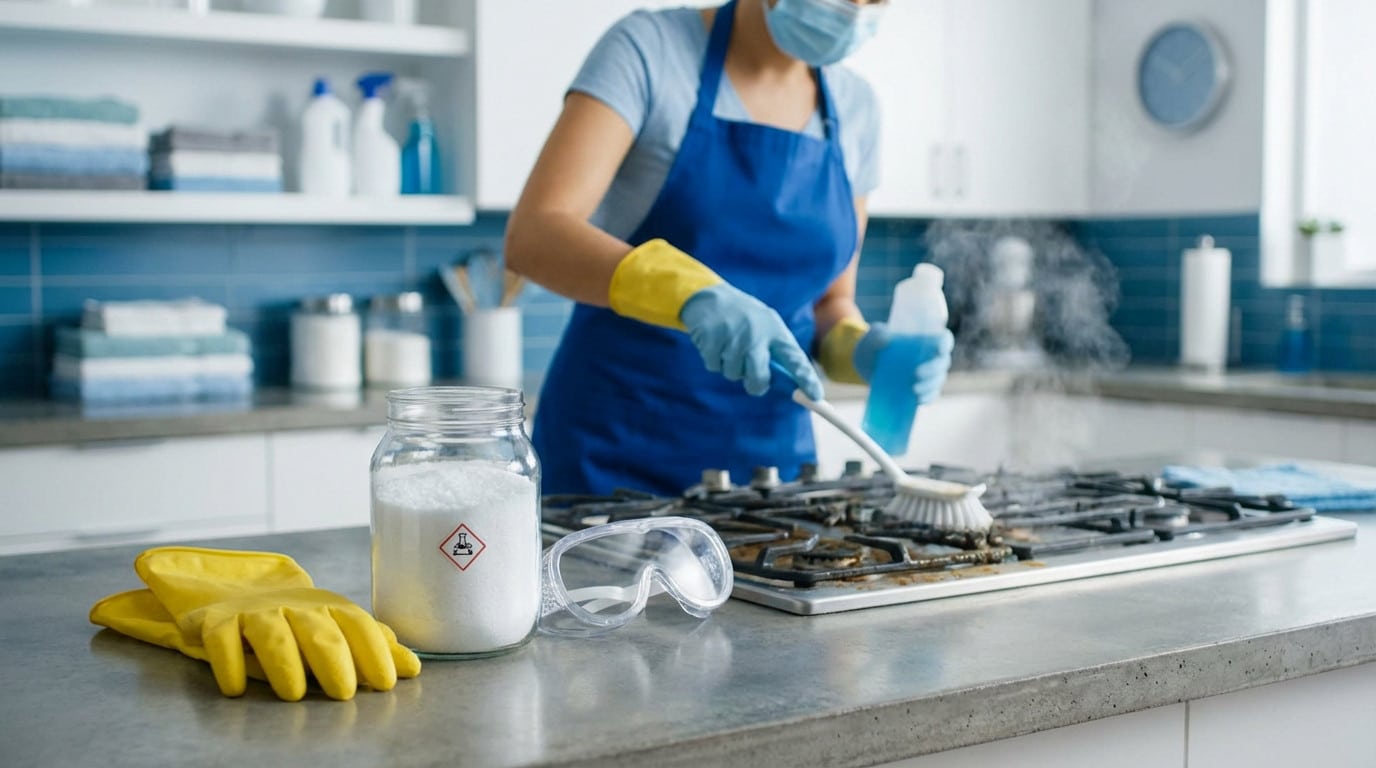
This stuff burns skin instantly, so don’t take risks. Always wear thick gloves and protective goggles before opening the bottle.
Follow this exact method to clear the obstruction:
- Pour 1 cup (240 ml) of caustic soda crystals into the drain.
- add 3 cups (710 ml) of boiling water.
- Let it sit for hours in a ventilated area.
- Rinse well with hot water.
Tackling Baked-on Grease in the Kitchen
For burnt pans or greasy grills, put the harsh NaOH away. Sodium carbonate (washing soda) handles kitchen grime safely. It breaks down fats without destroying your cookware like the stronger stuff.
Sprinkle crystals on the bottom and soak with hot water. The grease lifts off after a good soak. For coffee stains on mugs, scrub with a paste of water and soda. You can find other surprising cleaning hacks using common pantry items to save money.
Everyday Uses and Strict No-Gos
Beyond emergencies, these chemicals have a spot in your routine, but knowing when to grab them—and when to leave them on the shelf—is vital.
Laundry Boosting and Water Softening
You are likely wasting money on detergent if you aren’t using sodium carbonate (washing soda). It acts as a powerhouse booster and tackles hard water that cripples your soap’s performance.
By binding to interfering minerals, it clears the path for your detergent to actually clean efficiently.
- For stubborn stains like grease, blood, or coffee, create a pre-wash solution by dissolving half a cup of crystals in a gallon of water.
- As a wash booster, toss a half-cup directly into the drum with your usual load.
Surfaces You Should Never Use Caustic Soda On
Stop and think before grabbing caustic soda (NaOH). This isn’t a friendly cleaner; it is a corrosive beast. Using it blindly causes irreversible damage because it doesn’t just clean, it destroys.
While some heavy-duty plastics can survive the burn, it is far too aggressive for most delicate materials.
- Aluminum: Caustic soda rapidly corrodes aluminum. There are better uses for aluminum foil than watching it dissolve.
- Wood: It strips finishes and damages fibers.
- Certain paint or floor finishes: Always test on a hidden spot.
- Copper and other non-ferrous metals.
Mastering the distinct roles of these chemical agents transforms our approach to household maintenance. While caustic soda remains the ultimate heavy-duty resolver for stubborn obstructions, washing soda proves itself as a versatile ally for daily grime. By judiciously selecting the appropriate compound, we ensure pristine results while diligently protecting our home’s surfaces.