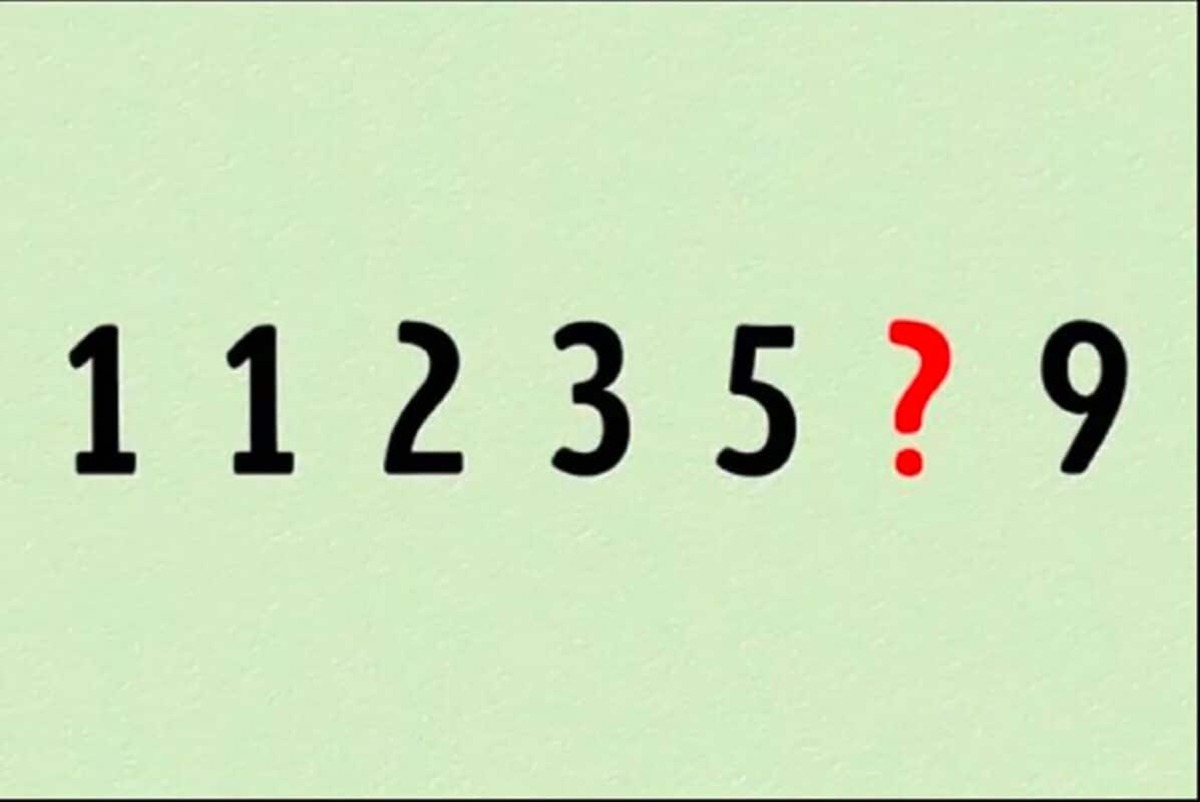
Dr. Emma Chen’s viral math puzzle has managed to unite curious minds around the globe. What begins as a simple brain teaser—just a sequence of numbers with one crucial value left blank—quickly transforms into a quest that tests every ounce of logical reasoning and mathematical intuition. As the challenge circulates on social platforms, classrooms, and online forums, it continues to baffle experts and enthusiasts alike. The real appeal lies in finding the elusive missing number, an answer only the most persistent genius seems able to uncover.
What makes Dr. Emma Chen’s puzzle so compelling?
The global enthusiasm surrounding this riddle stems not just from its apparent simplicity but also from the tantalizing complexity hidden underneath. Dr. Chen’s sequences, such as 2, 5, 11, 23 and 3, 7, 13, 25, seem approachable at first glance. Yet, as attempts to pinpoint the solution multiply, theories diverge rapidly and new possibilities emerge.
Some solvers see echoes of familiar patterns, while others spot anomalies suggesting a deeper mathematical twist. Suddenly, what looked like a standard progression is revealed to require a new perspective, sparking debate and collaboration across numerous disciplines. If you’re fascinated by unsolved number puzzles that have attracted international attention, you might enjoy exploring why the mystery behind some “missing number” challenges remains unresolved and how communities are still searching for definite answers.
Why do these sequences capture so much attention?
A significant part of the puzzle’s charm lies in how it teases both seasoned mathematicians and those who simply enjoy a good challenge. Each partial series appears almost trivial—until the search for logic leaves solvers running in circles. The hunt for the right sequence becomes more than a pastime; it evolves into a study in analytical thinking and creative reasoning.
Those drawn to solving complex problems often find themselves united by these challenges. Teachers now use the math puzzle as an educational tool, while competitive communities spring up to crowdsource innovative solutions and foster collaborative effort. Logical exercises like determining cause and effect or predicting outcomes based on connections are popular, and you could try similar reasoning with engaging brain teasers such as this logic-based dog and milk puzzle where sharp observation quickly reveals the answer.
How does the viral nature change the experience?
Widespread sharing only intensifies the challenge. A puzzle no longer remains confined to local math clubs or limited circles. Instead, Dr. Chen’s creation becomes a stage for collaboration between amateurs, researchers, and even artificial intelligence enthusiasts.
This viral reach has sparked educational programs and research initiatives, showing that a well-crafted brain teaser has the potential to influence how society approaches problem solving and collective learning.
Digging deeper: exploring possible patterns and solutions
Every solver brings a fresh theory: some lean toward classic arithmetic or geometric progressions, while others imagine links to prime numbers or factorial operations. Attempting to solve the series leads many down unexpected paths.
Spotting the true rhythm or algorithm behind each sequence drives the urge to unlock the secret—which makes success all the more satisfying for anyone able to crack the code hiding in Dr. Chen’s number grid.
Pattern-based approaches to solving the challenge
Those passionate about sequences often begin with differences: in 2, 5, 11, 23, for instance, the gaps widen in intriguing ways (3, 6, 12). Is there a formula doubling each step’s increase, or perhaps a rule mixing multiplication and addition?
Other times, a closer look at factors, squares, or cubes reveals emerging trends. Some believe Dr. Chen crafted her number grids using unconventional steps, leading analysts to reconsider everything they know about constructing a mathematical sequence.
Prime patterns and non-linear thinking
Another popular theory suggests that primes play a role—yet in Dr. Chen’s examples, pure prime sequencing does not always fit. Non-linear progressions, such as exponential growth or nested functions, add even more layers of intrigue to this math puzzle.
Each failed attempt encourages solvers to question their own assumptions, reminding participants that having an open mind matters as much as technical skill when seeking a solution to a famous mathematical riddle.
The impact of the puzzle beyond mathematics
More than just a riddle for the mathematically inclined, Dr. Chen’s challenge has become a tool for fostering important cognitive skills. Educators employ the puzzle in classrooms to encourage critical thinking and perseverance, knowing learners benefit from wrestling with tough problems and discovering new methods of logical reasoning.
Beyond formal education, research institutions join the frenzy, launching competitions and studies dedicated solely to cracking the code. This unique blend of rivalry and cooperation attracts psychologists and computer scientists interested in how humans—and even AI—tackle abstract mathematical puzzles.
- Classroom exercises designed around the puzzle boost students’ engagement and creativity.
- Online communities collaborate openly, blending knowledge from various fields.
- Competitions offer incentives for original solutions or novel algorithms.
- AI researchers develop models to mimic human problem-solving behaviors using these puzzles.
Speculation, collaboration, and the relentless pursuit of the missing number
As speculation grows, the discussion extends far beyond traditional math circles. Everyday enthusiasts join forces with data scientists, trying new techniques or leveraging computational tools to dissect the sequences. Debates flare up in comment sections, each participant eager to share a fresh hypothesis and contribute to the worldwide challenge.
Whether the answer involves a clever recurrence relation, a quirky twist on prime patterns, or something entirely unforeseen, the puzzle continues to reward curiosity and creative thinking above rote memorization. The journey itself turns out to be almost as captivating as discovering the elusive missing number hiding at the end of Dr. Chen’s viral series.