Does the daunting prospect of buying used car listings in an inflated market leave you worried about inheriting a costly mechanical disaster? We examine the rigorous verification process and financial strategies necessary to secure a dependable vehicle while avoiding the financial trap of a lemon. You will master the professional inspection techniques that expose concealed damage, ensuring your investment remains safe from the pervasive risks of fraud and shoddy repairs.
The Paper Trail: Your First Line of Defense
Set Your Budget Before You Even Look
The market is brutal right now. With average used prices hitting $29,011 in late 2021, you can’t just wing it. A solid budget is your only shield against overpaying when buying used car.
Financial experts swear by the 20/4/10 rule: put down 20%, finance for four years max, and keep total car costs under 10% of monthly income. Don’t forget the total cost of ownership, like insurance and fuel, in your math.
This financial discipline stops you from making an emotional, wallet-draining mistake later on.
Decode the Vehicle’s Past With the VIN
Never skip the Vehicle History Report; it is non-negotiable. You need the 17-character VIN, usually found on the driver’s side windshield, to unlock this data. It’s the only way to see what’s hiding.
- Title history (any salvage, flood, or rebuilt titles).
- Official accident records from police or insurance claims.
- Reported service and maintenance history.
- Odometer readings logged.
- Number of previous owners.
If a seller won’t share the VIN, they are hiding something. That is a massive red flag—just walk away immediately.
Check the Maintenance Records and Title
You must demand the physical service book and receipts. These papers are the only real proof of whether the previous owner actually cared for the machine or neglected it.
Compare the mileage on the dashboard against the numbers on the latest maintenance invoices. Any mismatch here suggests odometer fraud, which is surprisingly common in this tight market.
Always verify the seller’s ID matches the name on the vehicle title exactly. If they don’t match, do not sign anything.
The Visual Inspection: What the Seller Hopes You Won’t See
Once the papers seem in order, trust your eyes and hunt for flaws the seller hopes you miss.
Scan the Body for Signs of Shoddy Repairs
Your goal is finding evidence of past accidents. Start by checking panel alignment; gaps between doors, fenders, and the hood must be perfectly regular.
Next, hunt for paint inconsistencies. You might spot overspray on rubber seals or inside door jambs. These sloppy marks betray a cheap respray job.
Twisted metal bumper supports are the signature of a rushed, low-cost repair.
| Check Area | What to Look For | Red Flag If… |
|---|---|---|
| Body Panels | Even gaps, smooth lines | Gaps are uneven, panels don’t align. |
| Paint | Consistent color and finish across the car | Mismatched shades, overspray, bubbling paint. |
| Doors & Trunk | Open and close smoothly without effort | They stick, are hard to close, or make grinding noises. |
| Tires | Even tread wear, no visible damage | Uneven wear (inside/outside), visible cracks or bulges. |
| Underbody | Minor surface rust in some climates | Heavy corrosion, bent frame parts, fresh scrape marks. |
Inspect the Tires and Glass
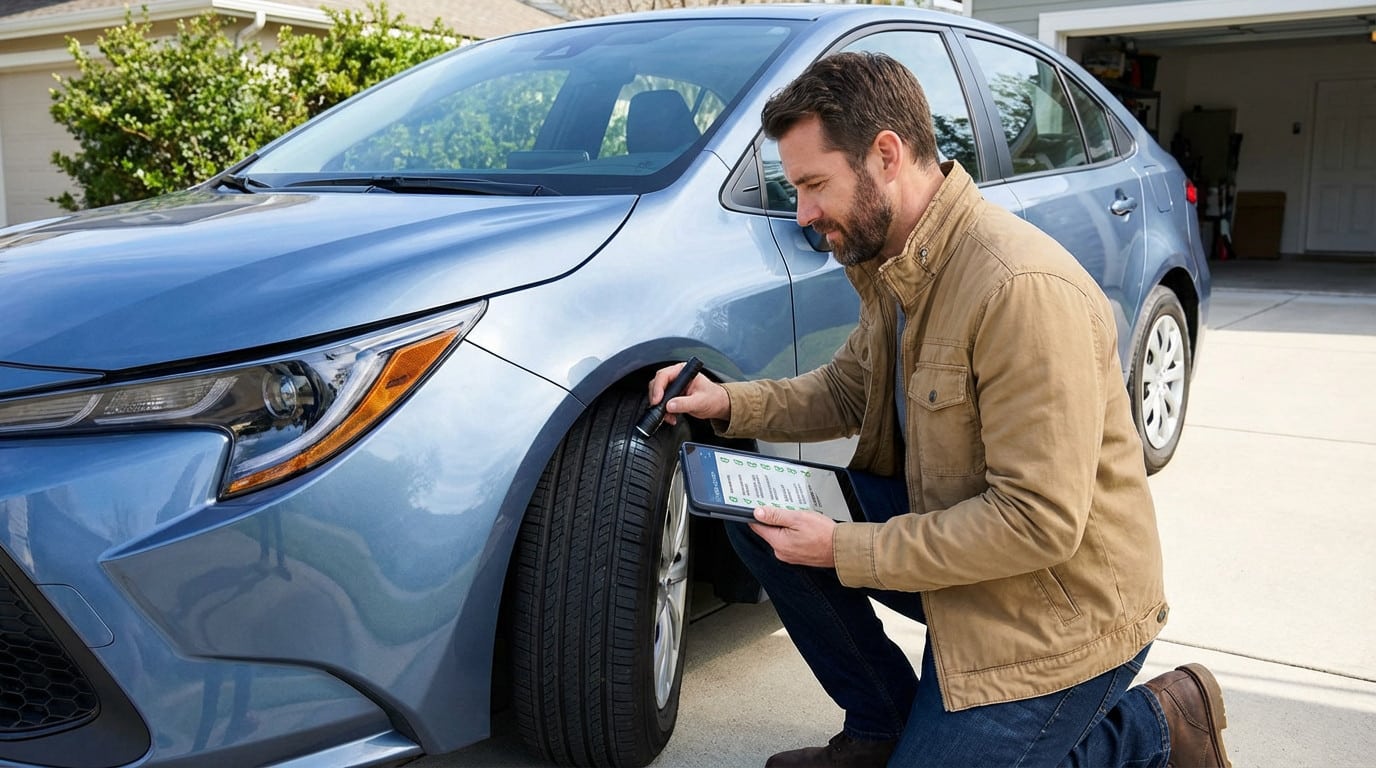
Tires reveal a lot when buying a used car. Uneven wear signals a serious alignment problem, often pointing to worn suspension or past impacts.
Look for cracks, dry rot, or exposed steel wires. These are clear signs of dangerous neglect.
Ensure all windows bear the same manufacturer logo. A mismatch indicates replacement following an accident.
Evaluate the Interior Condition
Cabin wear must match the odometer. Sagging seats or worn pedals on a low-mileage car are highly suspicious.
Test absolutely everything: switches, radio, AC, and seatbelts. Leave nothing to chance, as broken electronics are expensive to fix.
A musty smell or damp carpets betray water infiltration, often pointing to hidden flood damage.
The Mechanical Deep Dive: Beyond the Surface
A shiny exterior often masks a mechanical nightmare, so we need to look past the polish.
Perform Your Own Under-the-Hood Check
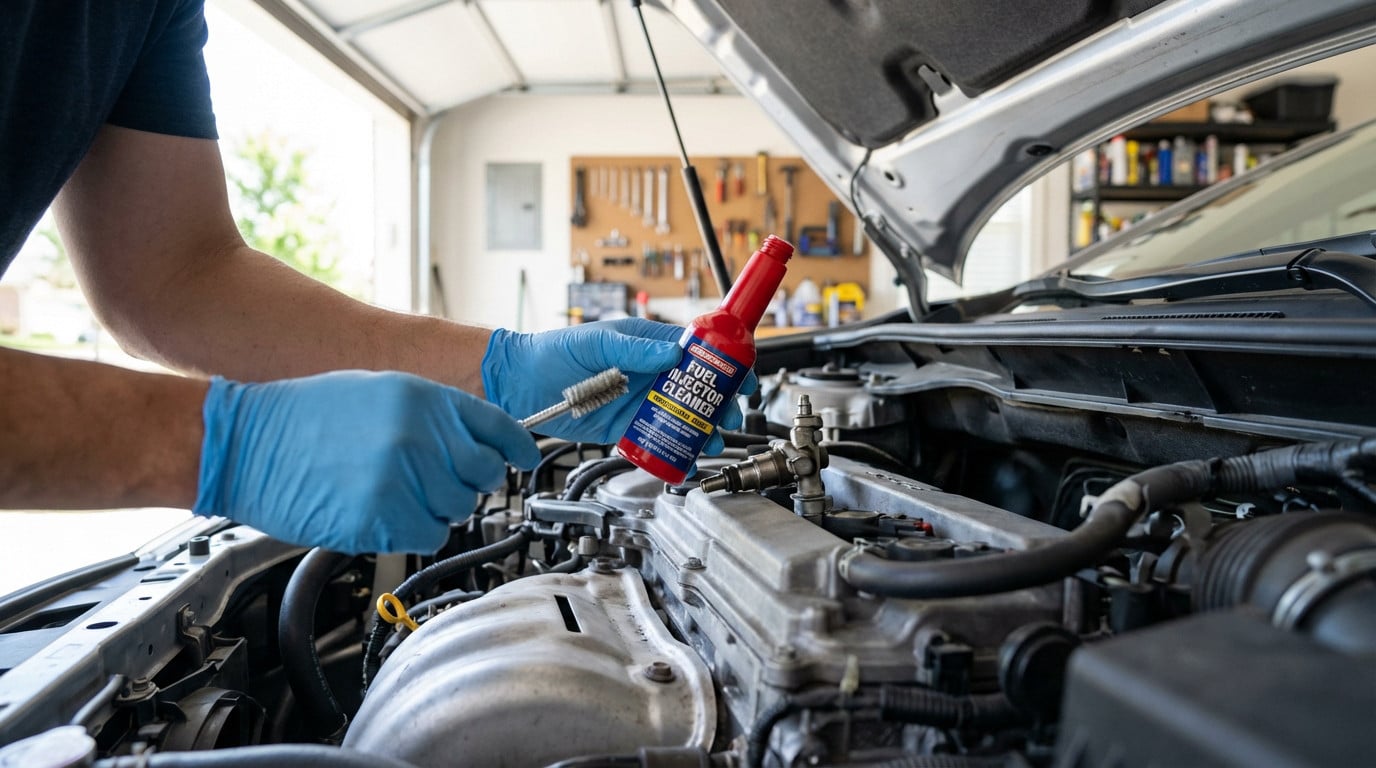
Pop the hood and stare right at the engine block. Be skeptical of a motor that looks too clean or excessively filthy. You are hunting for obvious signs of corrosion or rust.
Check the levels of every single fluid reservoir yourself. Motor oil needs to be a rich amber color, never thick and black. Coolant and brake fluid levels must sit right at the correct lines. Ignoring this is a rookie mistake.
Let the engine run, move the vehicle, and inspect the pavement. You want to spot any fresh fluid drops.
The Non-negotiable Pre-purchase Inspection (PPI)
This is the single most important step in the buying used car process. A history report simply does not cut it here. You must get the car inspected by an independent mechanic.
A pro has the equipment to spot problems you cannot see. They use lifts to find frame damage, hidden codes, or past airbag deployment. They verify safety systems to avoid fatal car accidents. Spending $200 now saves you thousands later.
If a seller refuses an inspection by a third party, walk away. You must end the transaction immediately.
The Test Drive Is More Than Just a Joyride
Drive the car on city streets and open highways. Turn off the radio to listen for any suspicious noises. Feel for vibrations when you brake or hit the gas pedal.
You need to be hyper-aware of specific warning signs on the road. Keep your senses sharp for these symptoms during the drive. Ignoring them is a major financial risk.
- Strange engine noises (knocking, whining).
- Vibrations through the steering wheel or brake pedal.
- car pulling to one side.
- Smoke from the exhaust (blue, white, or black).
- Any warning lights on the dashboard.
Shifting gears must be fluid without jerks or delays. A failing transmission is an extremely expensive repair.
The Deal Itself: Navigating the Sale and Dodging Pitfalls
Finding a reliable vehicle is only half the battle; navigating the actual sale without getting fleeced is the other half.
Understanding Warranties and “As Is” Sales
At the dealership, immediately hunt for the “Buyer’s Guide” sticker on the window. This legal document indicates if the car is sold “as is” (no warranty) or with a warranty.
“As is” means you are responsible for all problems once you leave the parking. A dealer’s limited warranty offers some protection. Private sales are almost always “as is”.
This sticker has more legal value than any verbal promise.
Negotiating the Price and Avoiding Add-ons
Your negotiation power comes from your research: the history report and the inspection. Use every defect found while buying a used car to make the price drop.
Focus solely on the ““out-the-door” final price. Do not get dragged into monthly payment talks, which often mask hidden fees.
Be vigilant against these specific add-ons:
- VIN Etching.
- Fabric and Paint Protection.
- Extended Warranties (often overpriced).
- Nitrogen-filled tires.
The Paperwork to Finalize the Purchase
Read each document carefully before signing. Ensure the VIN on the contract is the same as the car. Verify the price and financing terms are exact.
After signing, you must handle the title transfer, registration, and insurance.
These paperwork principles are just as important as when you buy a car online safely.
The Safer Bet: Certified Pre-Owned (CPO) and Special Cases
If all those checks sound like a tedious headache, there is a simpler alternative, though it usually costs more.
What Is a Certified Pre-Owned (CPO) Vehicle?
Certified Pre-Owned (CPO) vehicles sit right between new and risky used options. These are late-model cars with low mileage sold by a dealer of the same brand.
They undergo a rigorous multipoint inspection and are covered by a manufacturer warranty. This coverage offers serious peace of mind. It drastically reduces your risk of buying a lemon.
The main downside is the price tag, which is noticeably higher than non-certified used models.
Special Considerations for Electric Vehicles (EVs)
For a used electric vehicle, the most significant component is the battery. Its health directly determines the range and the actual value of the car.
A battery evaluation by a specialist is absolutely mandatory here. This report shows current maximum capacity versus the original capacity, which is vital information. Don’t skip this step.
Spotting Red Flags from Different Sellers
Whether dealing with a dealer or a private party, beware of high-pressure sales tactics. Walk away immediately if an offer looks “too good to be true.”
For a private seller, refusing a public meeting or mechanical inspection is a major red flag. Run if they hide the VIN. At a dealership, watch closely for surprise fees appearing at the last minute.
Navigating the pre-owned market demands vigilance, yet the reward is substantial. By meticulously verifying history, inspecting mechanics, and trusting our instincts, we turn a potential risk into a calculated investment. Armed with these comprehensive strategies, you can approach the negotiation table with confidence, ensuring your next vehicle delivers both reliability and lasting peace of mind.