Nothing disrupts our schedule quite like a silent engine, making a precise battery alternator diagnosis the only reliable way to avoid expensive and unnecessary repairs. We dissect the specific roles and distinct failure symptoms of these components to help you determine whether your vehicle suffers from a drained power reserve or a defect within the charging system. Discover the definitive visual signs and simple testing methods that enable us to identify the true electrical culprit with absolute certainty.
Battery vs. Alternator: Understanding Their Distinct Roles
The Battery: Your Car’s Initial Power Burst
Think of the battery as a sprinter. It stores chemical energy waiting for a signal. Its main job is delivering a massive jolt of electricity to crank the engine. Once the car is off, it powers the radio and lights.
Sadly, this component isn’t built to last forever, typically surviving just 3 to 5 years. Scorching heat and deep discharge cycles will kill it faster. Treat it like a consumable part, because it is.
Ignoring its condition is a rookie mistake. It remains one of the key car reliability factors you must inspect. When performing a battery alternator diagnosis, always start here. It’s the first suspect in any non-start situation.
The Alternator: The Powerhouse That Keeps You Running
While the battery sprints, the alternator runs the marathon. As soon as the engine fires up, this generator takes full control. It churns out electricity for every system, from wipers to AC. Simultaneously, it tops off the battery for your next drive.
You can expect better longevity here, usually lasting 7 to 10 years. Failures often stem from worn-out bearings or intense engine heat. Electrical spikes can also fry the internal components without warning.
Seeing the difference side-by-side clears up the confusion. Here is the breakdown of who does what under the hood. Take a look at the specs below.
| Component | Primary Role | Typical Lifespan |
|---|---|---|
| Car Battery | Provides starting power, runs electronics with engine off | 3-5 years |
| Alternator | Recharges the battery, powers electronics with engine on | 7-10 years |
Decoding the Symptoms: Is It Your Battery or Alternator?
Now that the roles are clear, interpreting failure symptoms becomes logical. Getting the battery alternator diagnosis right prevents wasting money on parts you don’t actually need.
Common Signs of a Failing Battery
Battery issues are tied to the initial startup. If your car struggles to wake up, the battery is the prime suspect. It is the classic sign of trouble.
A slow engine crank or rapid clicking noise indicates low voltage. If you frequently need jump-starts to get going, the message is clear.
Watch the physical condition. A swollen case signals internal damage and demands immediate replacement.
- Slow engine crank
- Frequent need for jump-starts
- Dimming headlights when the engine is off
- distinct clicking sound when turning the key
- A swollen or leaking battery case (requires immediate replacement)
- Battery age is over 3-5 years
Tell-tale Signs of a Bad Alternator
Alternator problems appear when the engine is running. If the battery dies while driving, the recharging cycle has failed.
Dashboard warning lights (battery icon or ‘ALT’) are direct alarms. Dimming or flickering headlights while driving also signal inconsistent voltage.
Burning smells or grinding sounds from the engine bay are physical cues. These often point to worn bearings or a slipping belt.
- Dashboard warning light (battery, ‘ALT’, ‘GEN’) is on
- Electrical failures (dimming/flickering lights, erratic gauges)
- Strange noises (grinding or whining) from the engine bay
- Burning smell from an overheating alternator
- dies repeatedly even after being charged or replaced
The Definitive Diagnosis: Simple Tests to Find the Culprit
The symptoms have likely put you on a track, but guessing is expensive. Let’s move to concrete tests to confirm your suspicions without getting it wrong.
The Jump-Start Test: A Quick and Revealing Check
Start with a visual inspection. Check for corrosion on the battery terminals, a swollen case, or nasty leaks. These are clear signs of end-of-life failure.
Explain the jump-start test. If the car starts with cables but stalls almost immediately after you disconnect them, the culprit is most likely the alternator.
Conversely, if the engine keeps running normally after removing the cables, the problem comes from the battery failing to hold a charge. This simple test is often enough for a first diagnosis. It’s a standard verification on any used car inspection checklist.
Using a Multimeter: The Moment of Truth
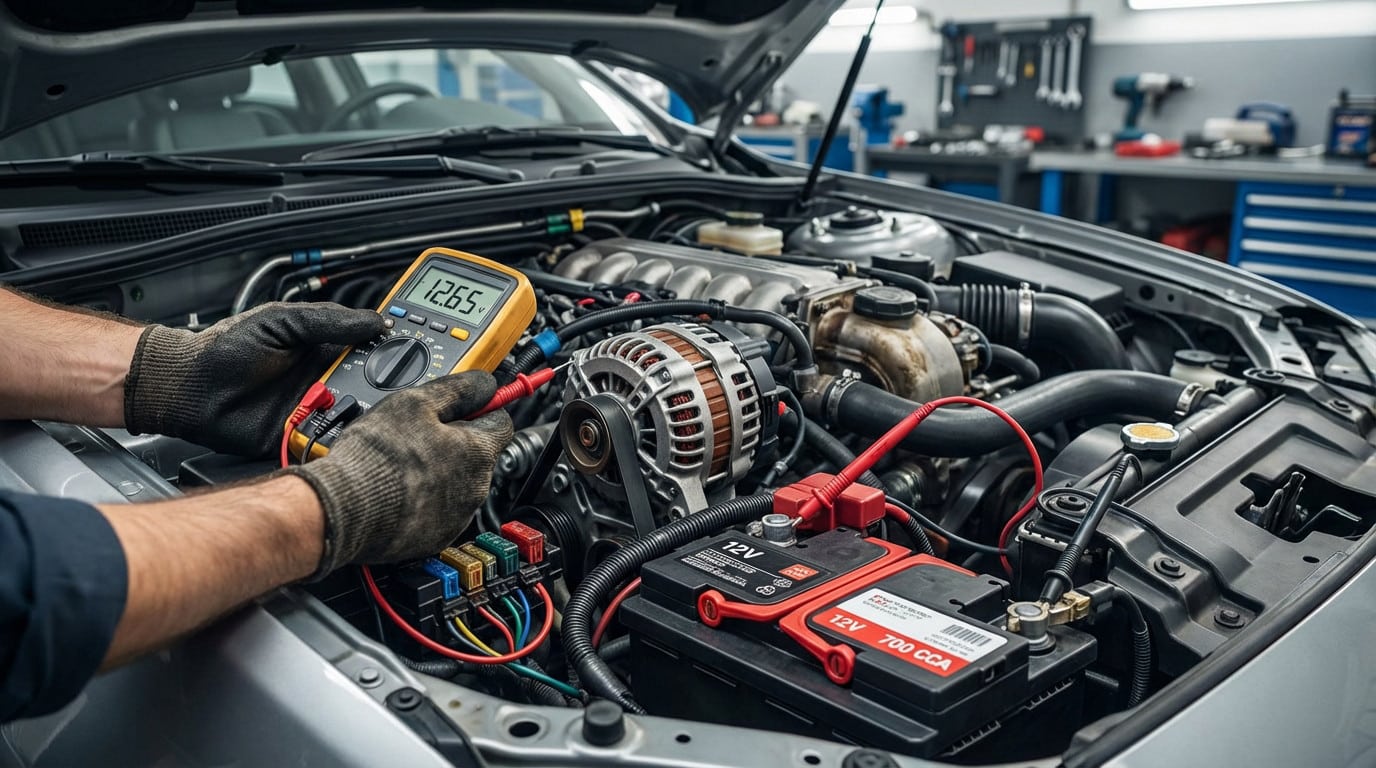
The multimeter is the tool that gives a non-negotiable, numbered answer. It is the most reliable way to make the distinction. It’s a small investment that can save you a lot.
To test the battery, with the engine off, the voltage must be around 12.6 volts. A value lower than 12.2V indicates a weak or defective battery.
- To test the alternator, start the engine.
- Measure the voltage at the battery terminals.
- healthy reading sits between 13.5 and 14.5 volts.
- If voltage stays near 12V or is much higher than 14.5V, your alternator has a problem.
Distinguishing between a drained battery and a faltering alternator is crucial for vehicle longevity. Whether it concerns the initial spark or the sustaining power, identifying the true culprit ensures we avoid unexpected breakdowns. By observing subtle symptoms and performing definitive voltage tests, we empower ourselves to address these electrical issues efficiently and keep our engines running.